How data-driven patient engagement helps establish relationships with patients




89% of the PCPs spend29 less than 25 minutes with their patients during a single encounter, and often this also includes the time they spend on feeding and retrieving data. During an encounter, providers should look for establishing a relationship with their patients based on trust.
Broadly, patient needs can be divided into four categories. They want their providers to respect their thoughts and time, be empathetic, provide the best possible care, and charge them reasonably. Organizations first need to segregate patients based on their health issues and then triage them according to the need. Having a fixed strategy to deal with different types of patients may act as a roadblock in bringing patients closer to the care teams.
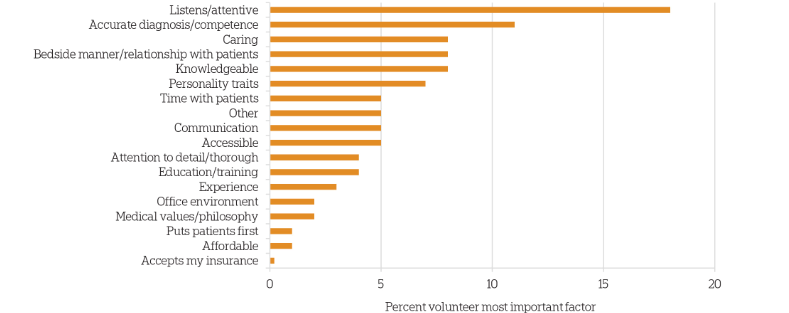
Factors that make a high-quality doctor for patients30
Care teams should maintain complete transparency while communicating with their patients to enable shared decision-making at each instance. In addition to the medical aspect of care delivery, patients value31 human attributes such as listening, explanation, reassurance, follow-up, language, caring, understanding, context, liking, respect, and trust in the medical competence and personal integrity. Organizations should ensure that their care teams are trained in a proper manner to consider such interpersonal aspects while imparting care. While medical knowledge is paramount, these factors contribute immensely in establishing a relationship with patients.

with the Power of Comet


.svg)
.svg)

.svg)