.png)
.png)
Stimulants. What comes to mind? A jolt from Starbucks, something spicy from the pantry, maybe even a bartender’s best work (though that’s technically a depressant).

For a business, analytics can be a stimulant — a catalyst that makes organizations sharper, faster, and more effective at achieving outcomes.
When I started in healthcare ages ago, analytics was still a “nice idea” for most, but payers were the early movers in big data — they had to be, since scale is everything in a risk-bearing business. Yet for anyone that has lived through the demands on analytics in such an organization, or maybe any developing organization, you’ll have lived through the analytical chaos — the multitude of data cuts, the “one more report” syndrome, the paralysis that comes from too much and not enough all at once — it was endless, never finished. And it was through these trials that my framework started to take shape.
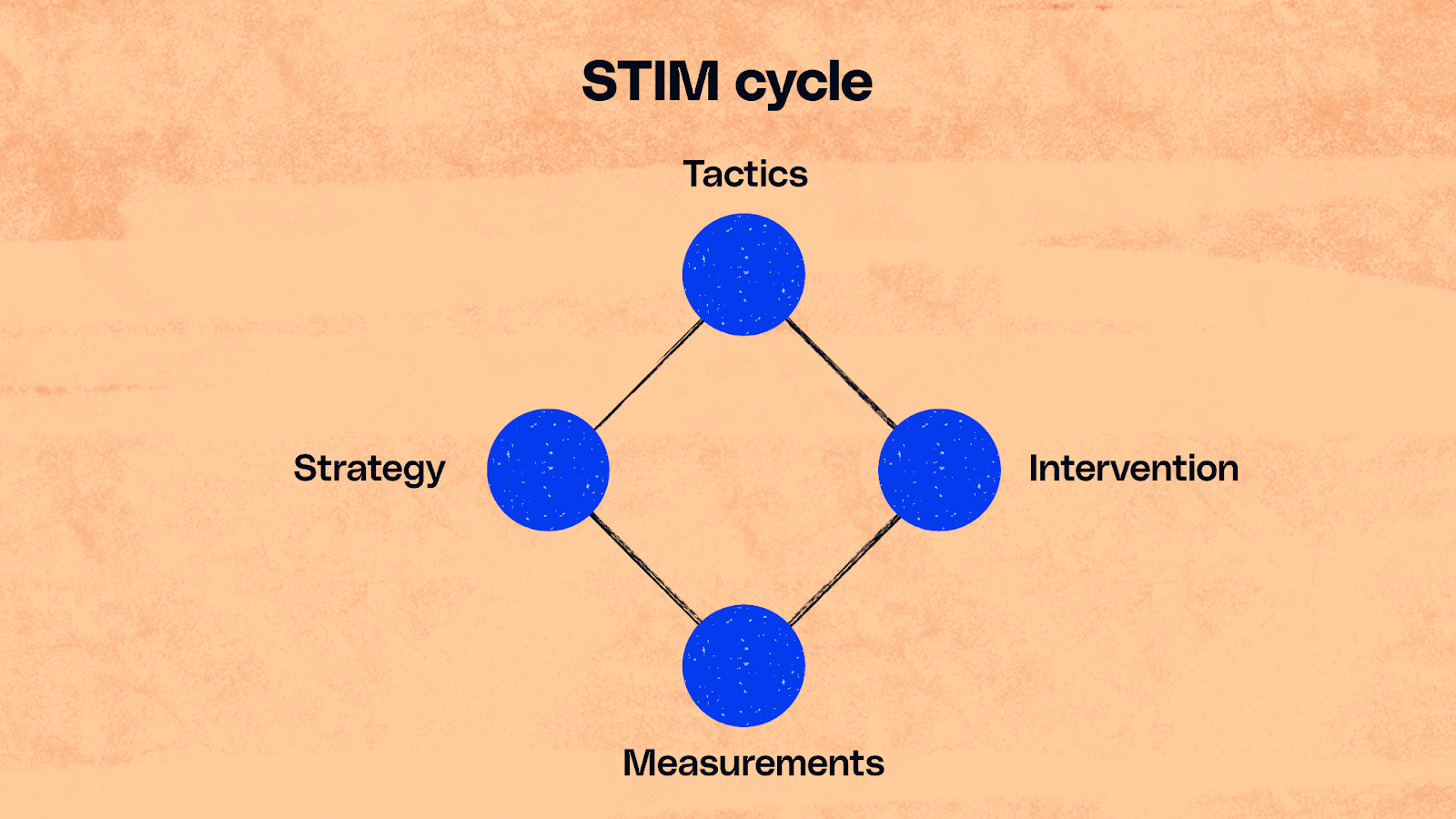
You see, all initiatives to stimulate a business or to enact change, whether in healthcare or any other industry, takes 4 stages: the formulation of a strategy, followed by the identification of opportunities for tactical intervention, the intervention itself, and finally the measurement of the efficacy of those interventions and the outcomes of the strategy. Words and phrases of those steps may appear different from provider practice to practice, payer to payer, or industry to industry, but fundamentally, these are the steps:
- Strategy Formulation
- Tactical Opportunity Identification
- Intervention
- Measurement
Or, more memorably: S-T-I-M.
S — Strategy Formulation
“Strategy” might be one of the most overused and ambiguous words in business (coincidentally, alongside “analytics” and “model”). Here it simply means: where do we focus to create value? Analytics that support strategy formulation essentially informs choice — pointing to lagging performance, unsustainable trends, or the clearest opportunities. Think lagging, descriptive indicators that depict the overall “health” of a business.
In population health, that might mean honing in on avoidable readmissions. More plainly: if your rate towers above your peers, it’s time to address it.

T — Tactical Opportunity Identification
Once the “where” is clear, analytics identifies the “who” and “what.” Which patients, providers, or procedures should be targeted — and why? These then are usually the leading indicators of a business’s performance, however that’s defined.
Sometimes it’s broad (target all patients in a five-mile radius). Sometimes it’s precise (a handful of high-risk patients). The right granularity matters — analytics in this step becomes useful when it can narrow focus to maximize the impact of your intended interventions.
I — Intervention
Too often, analytics hands things off here — because operational execution usually sits in a different division than the team defining strategy and targets. That handoff is exactly where execution drifts, and entire initiatives lose momentum.
The right analytics at this stage often look deceptively simple. They’re not complex models, but dashboards in their purest sense: lists of patients or providers that require action. The point is discipline — making sure the intervention reaches the right cohort, at the right pace, in the right way.
Think of it like a conductor handing sheet music to the orchestra, ensuring every musician has the right notes in front of them, at the right time, so the performance doesn’t fall apart.

This isn’t about outcomes yet. It’s about execution data: supplying tactical opportunities to the right operators, at the right time and place, so the “effect” is delivered exactly as intended.
M — Measurement
Finally, measure. Twice.
First: did we execute as planned?
Second: did it actually work?
This is where the loops kick in. Outcomes feed back into strategy formulation (or revision): repeat what works, redirect if not. And interventions may need retargeting mid-flight.
Analytics is what makes those loops visible — the gear that keeps the whole thing turning.
—---------------
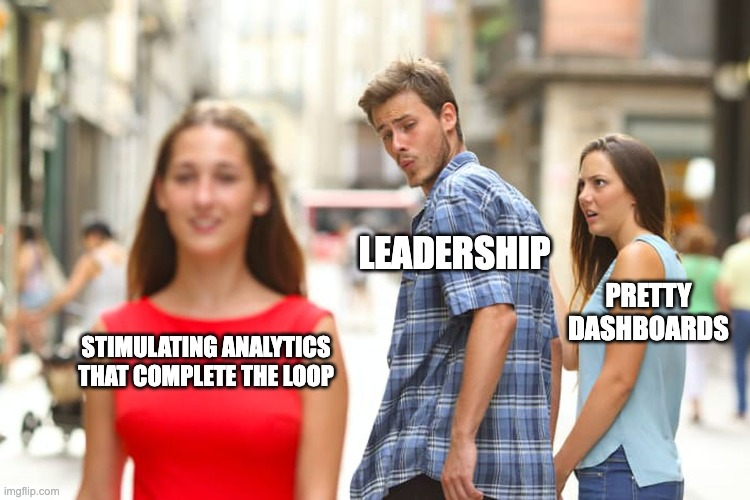
At Innovaccer, we strive for analytics to be that underlying reagent that STIMulates the entire chain. Analytics shouldn’t just be decorative dashboards; they should move organizations through the full cycle of Strategy, Tactics, Intervention, and Measurement. That’s how analytics earns its place — not as reports, but as stimulants for real outcomes. Otherwise, you’re always left unfinished.