In the past, many parts of Saudi Arabia relied on traditional healthcare methods. A child with recurring fever often had to visit multiple clinics before he was accurately diagnosed, while a patient in rural areas had to travel long distances for routine check-ups. This was because monitoring and follow-ups were largely manual and location-dependent. Healthcare delivery focused on treating diseases rather than preventing them.
I would often come across healthcare and technology leaders who recognized these limitations firsthand. They understood that being reactive could only take us so far. What we needed was to bolster our capabilities to anticipate health needs, optimize care delivery, and leverage technology to make healthcare more accessible and personalized.
Saudi Arabia was already moving in that direction, but with the launch of Project Transcendence, a$100billion investment to bolster AI capabilities, the vision is now accelerating at an unimaginable pace.
Project Transcendence: Laying the Digital Foundation
When announced last year, Project Transcendence established itself as one of the most ambitious AI and data-driven initiatives globally. Billions were being invested in advanced data centers, sovereign AI models, and cutting-edge computing capabilities. The project was not just about adopting technology, but it was about building the foundation for an AI-powered economy.
Many saw it as Saudi Arabia’s launchpad to AI global dominance, rivaling established tech hubs to accelerate its Vision 2030 aspirations. A year later, the scale and intent of this project are coming into focus.
The Kingdom has:
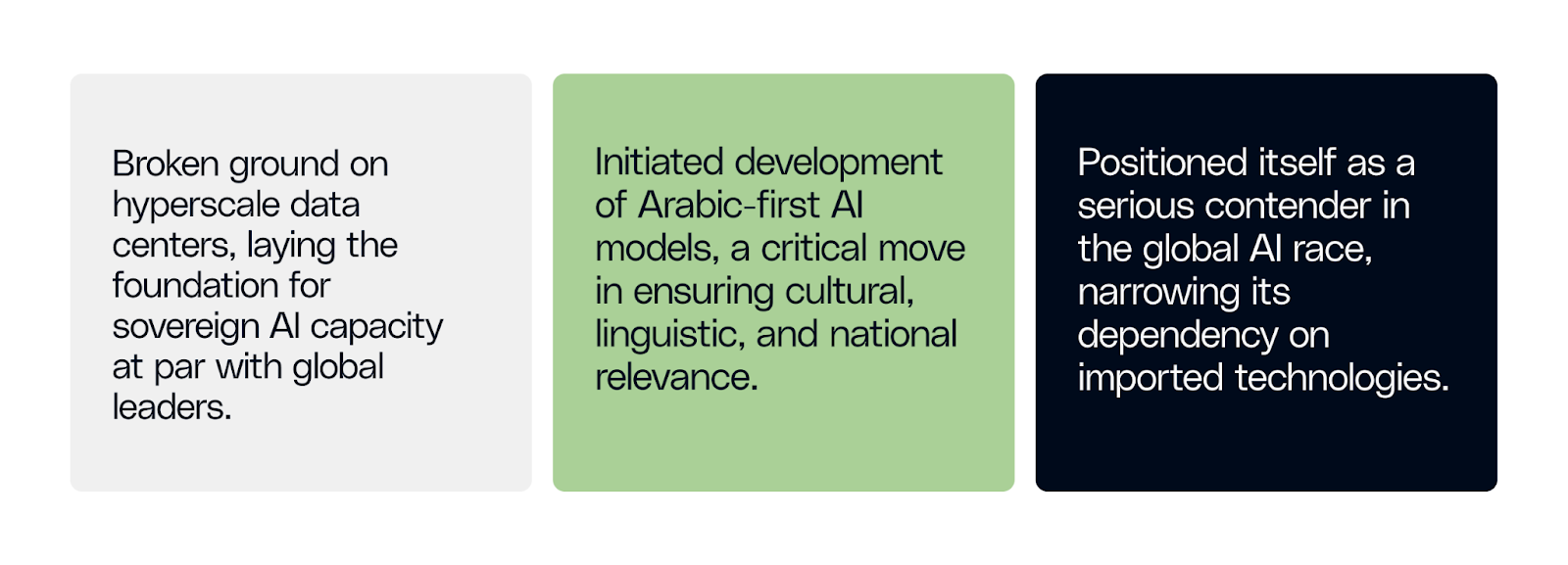
What strikes me most, however, is how quickly Project Transcendence has shifted from being a “grand announcement” to becoming a practical enabler of cross-sector innovation. We are no longer discussing the project in terms of its ambition or scale; we are viewing it as an infrastructure project with tangible ripple effects across industries, from healthcare to finance.
In healthcare, such projects are even more promising as no sector is more dependent on real-time data, predictive analytics, and secure infrastructure than healthcare.
Saudi Arabia’s Healthcare: A Strong Starting Point
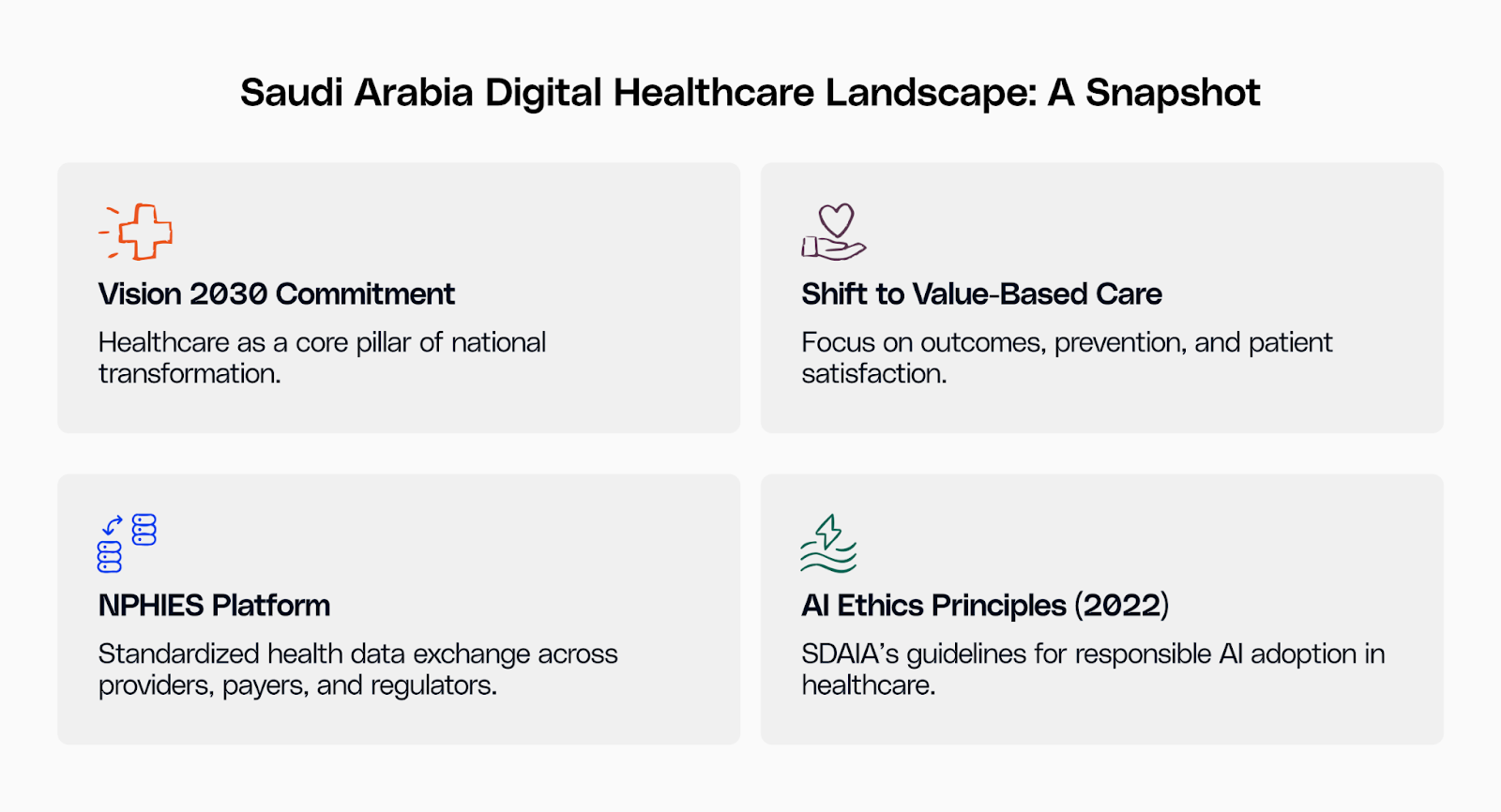
Even before Project Transcendence came into the picture, healthcare modernization was already a core pillar of the region’s Vision 2030 initiative. The government was actively laying the groundwork for a future-ready healthcare system. Over the past few years, I’ve seen the Kingdom make bold moves to expand telemedicine and unify electronic health records, steps that have already improved access and patient experience.
What has been most impressive for me is the Kingdom’s shift toward value-based care. Instead of rewarding providers for the number of procedures performed, the system is beginning to reward them for the quality of outcomes achieved. That's to say, we are no longer focused solely on treatments. We are looking at patient care from a holistic perspective. Prevention, chronic disease management, and patient satisfaction are our focus.
I’ve seen early pilots where hospitals are incentivized to reduce readmissions, improve diabetes management, and encourage healthier lifestyles. It’s a profound cultural change, one that is making the healthcare industry more patient-centered.
But in order to meet such lofty aspirations, we also need to have robust digital and AI capabilities, which is what Project Transcendence was developed to offer. Project Transcendence will provide the intelligence, the infrastructure, and the scale to deliver healthcare programs in the Kingdom.
The Ripple Effect of Project Transcendence on Healthcare
When Saudi Arabia builds one of the most advanced AI ecosystems in the world, healthcare will be among the biggest beneficiaries. Here’s what I believe we’ll be seeing in the coming years:
- Population Health & Predictive Care: Massive data processing will enable models to forecast disease trends, track chronic conditions, and guide preventive strategies. This is aligned with Vision 2030’s goal of shifting from treatment to prevention.
- Personalized Patient Journeys: With the ability to integrate clinical, genomic, and behavioral data, AI will move Saudi healthcare closer to precision medicine.
- Operational Excellence: Hospitals will be able to automate workflows, optimize resource allocation, and improve overall efficiency.
- Rural Access & Inclusion: Enhanced digital connectivity ensures that patients in remote villages have the same access to quality care as those in Riyadh or Jeddah.
From my perspective, these ripple effects will significantly shape how healthcare is experienced in the region. Providers will no longer struggle with fragmented data, and patients will no longer rely on a system that supports them only when they are unwell. And most importantly, healthcare in Saudi Arabia will become more predictive, preventive, and patient-centered.
What Will it Take for Healthcare Systems to Fully Benefit from Project Transcendence?
For all its potential, Project Transcendence is not a magic switch; it is an enabler. I believe healthcare systems in Saudi Arabia must be ready to adapt and evolve alongside it.
Here’s what I think that means:
- Embrace data-driven cultures: It's no longer sufficient for hospitals to just digitize records. It's really about using data to help inform our day-to-day decisions. This means we have to trust analytics and create a culture where insights and not just intuitions are shaping the way we deliver care.
- Invest in workforce upskilling: Project Transcendence will no doubt attract some of the brightest AI talent from around the world, and that’s a huge advantage. But we have to focus on imparting training in AI literacy and digital health tools to clinicians, administrators, and public health leaders so that we can reap the benefits of an advanced infrastructure.
- Make value-based care the norm: With a stronger digital infrastructure, it becomes so much easier to measure outcomes. Healthcare systems should leverage this chance and lean into value-based care.
- Create partnerships across public and private sectors: No one organization can transform healthcare on its own. Governments, hospitals, startups, and global technology partners will need to work together to co-create solutions that are unique for Saudi patients and communities.
- Prioritize equity: No matter how exciting AI is, we need to prioritize inclusivity. The real success of Project Transcendence will be seen when a patient in a remote village gets the same level of care and attention as someone in a city.
A Year into Project Transcendence, Saudi Healthcare is Just Getting Started
When all is said and done, Project Transcendence is more than just a billion-dollar investment. I am looking at the years ahead and can’t help but feel a deep sense of excitement for what’s already unfolding and what’s next to come. The Kingdom is laying down infrastructure that will continue to generate ripple effects. In the next years, we will be empowering clinicians, supporting patients, and inspiring other nations to rethink what healthcare can look like in an AI-driven world.
To me, Project Transcendence represents more than infrastructure; it represents intent, the intent to move healthcare from ambition to lasting impact. And if the past year is any indication, Saudi Arabia is on track to deliver a healthcare system that is not just modern, but truly future-ready.
What do you think about such ambitious and exciting projects? How do you see them shaping the Middle East healthcare? Let’s discuss. I’d love to hear your thoughts.