Healthcare’s Care Management Workforce is Under Siege. AI Might Be Their Best Shield




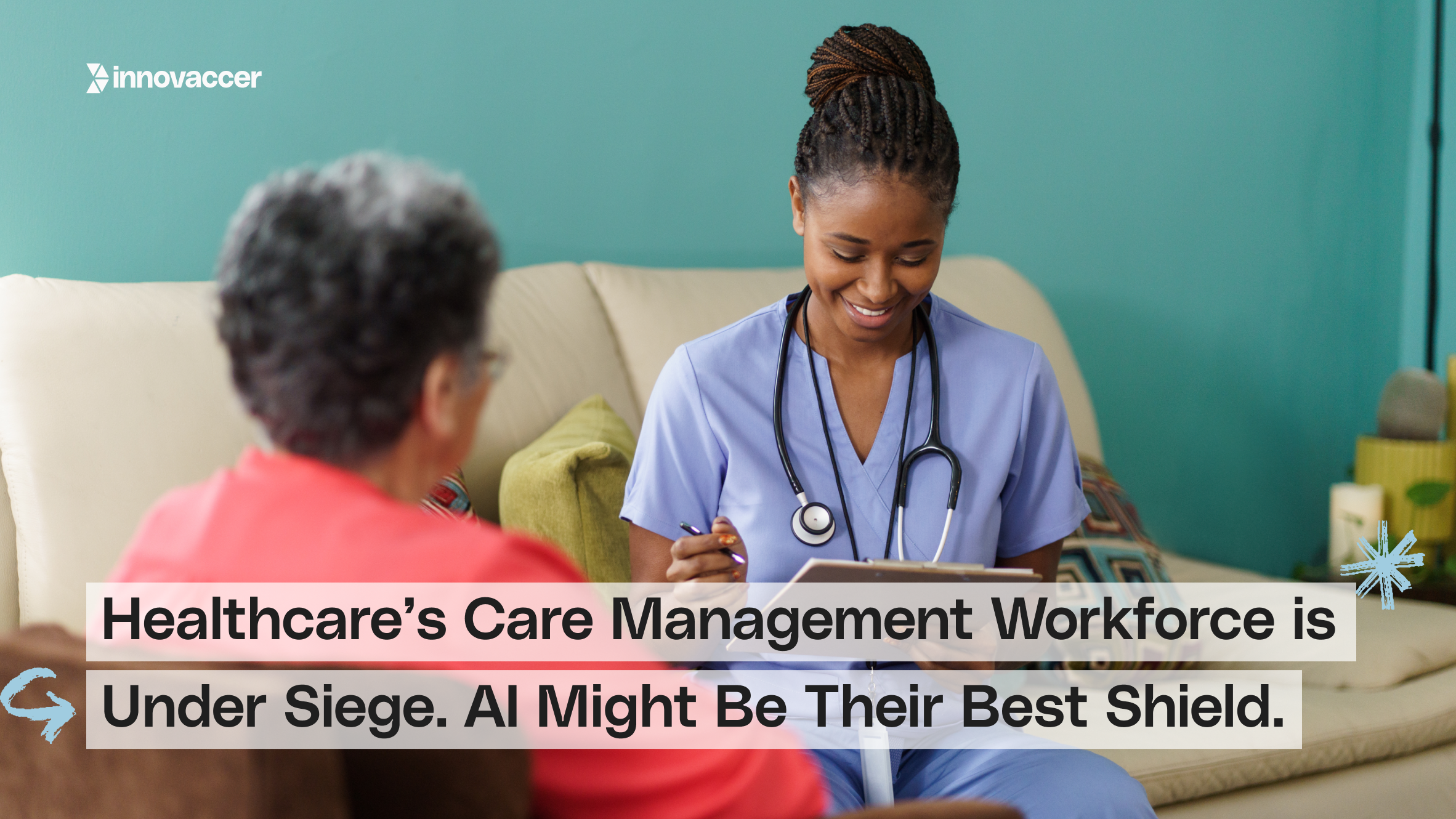
Snippet: Burnout. Documentation overload. Provider shortages. Mounting policy changes. The challenges for care management teams are hitting new highs, but early adopters of AI-supported solutions are already seeing relief. Delaying adoption may push organizations further behind.
The U.S. healthcare system stands at an unprecedented precipice.
Staffing shortages are widespread, as per a 2024 ACHE Survey. 71% of hospital leaders identified registered nurse shortages as their top workforce concern, and 35% cited physician shortages [1].
49% of physicians report burnout and 20% report depression, as per a 2024 Medscape survey [2].
The Medscape report also notes that 62% of respondents highlight administrative overload as the single greatest driver of burnout.
Clinicians’ spend close to 28 hours per week on administrative tasks, according to a study published in Google Cloud [3].
The situation intensified in 2024 when Medicaid redetermination processes resumed after a three-year pause, requiring providers to reverify eligibility for millions of patients.
Under the updated OBBBA rules, able-bodied adults aged 19 to 64 must prove at least 80 hours per month of work, training, community service, or education to maintain Medicaid coverage. Eligibility checks are now required every six months instead of annually.
For care managers and clinical administrators, these converging trends and policy changes mean increased patient outreach, document verification, eligibility checks, and care coordination.
As a result, the gap between the administrative demand of the healthcare environment and the resources available widen, threatening patient outcomes and organizational sustainability. AI tools help teams manage compliance and documentation tasks so care managers can stay focused on patient care.
Still, many hospital boards and C-suite leaders remain cautious about adopting AI-supported workflows. Most cite concerns about trust, loss of control, or past technology disappointments. Change doesn't come easily when trust has already been tested. But the risks of inaction now outweigh the risks of change.
[1] Medscape Physician Burnout & Depression Report: "We Have Much Work to Do" (2024)
[2] ACHE’s Executive Office, Research (2024)
[3] Measuring the administrative burden on U.S. healthcare workers—and how generative AI can help (2024)
The Paradox: Avoiding AI May Do More Harm
Healthcare AI tools have made quiet but significant inroads over the past two years. They reduce administrative burdens and improve care coordination. Yet despite these demonstrated benefits, many are reluctant to adopt them due to multiple challenges.
The first being the challenge of adopting new tech that might fall short on its promises and increase workloads. Concerns about AI inaccuracies and biases come in as a close second.
The deeper challenge isn’t technical, it’s psychological. The fear of losing clinical autonomy, of trusting the unfamiliar, of repeating the past. This resistance often emerges not from complacency, but preservation.
Results of Early AI Adoption
While many provider organizations are still hesitating, others are already deep into AI-powered care management, and they’re pulling ahead. Evidence from peer-reviewed studies and early adopters show that AI technologies don't replace clinicians. They augment care teams by absorbing repetitive, data-heavy, non-clinical work.
According to data from emerging use cases across accountable care organizations and integrated networks:
- A study published in JAMA Network found AI-powered documentation support cut after-hours work time by 30% per workday (from 50.6 to 35.4 minutes per day) [4]
- Staff retention improved, including among care managers and support staff, driven by reductions in burnout and task overload [5] [6]
- With predictive analysis, clinicians were able to proactively identify high-risk patients and offer proactive care, thus improving clinical outcomes [6]
- Frontline satisfaction increased, with staff reporting more time for direct patient interaction and care coordination [6] [7]
[4] Clinician Experiences With Ambient Scribe Technology to Assist With Documentation Burden and Efficiency (2025)
[5] Medscape and HIMSS Release 2024 Report on AI Adoption in Healthcare (2024)
[6] Benefits and Risks of AI in Health Care: Narrative Review (2024)
[7] Evaluating the Impact of Artificial Intelligence (AI) on Clinical Documentation Efficiency and Accuracy Across Clinical Settings: A Scoping Review (2024)
“Those who adapt to and embrace AI will outpace those who do not,” said Dr. Ted James of Harvard Medical School. “It’s all about managing change—both the opportunities and the challenges that come with AI.”
His point lands with urgency: when capacity is tight and costs are rising, the risk of inaction becomes greater than the risk of thoughtful experimentation.
However, successful AI adoption depends on prioritizing user-friendly design, maintaining transparency, and investing in frontline staff training. Jennifer Stoll, chief external affairs officer at OCHIN, a national health IT nonprofit warns, “If not done thoughtfully, AI will create a whole new set of haves and have-nots”.
Next week, we’ll cover how you can balance adoption with tactful implementation of AI workflows into your healthcare system. Stay tuned!
What AI Does and Doesn’t
Part of the problem is myth versus reality. The landscape is overrun with tropes: that AI can’t be trusted, that it will override clinicians, or that it’s too new to be useful.
The truth, across dozens of live deployments, paints a much more grounded picture:
| Myth | Reality |
|---|---|
| ❌ “AI replaces clinicians” | AI handles low-level, repetitive work such as medication adherence tracking, appointment scheduling, care gap alerts, not diagnostic judgment. |
| ❌ “AI isn’t proven” | Many providers report reduced burnout, faster care cycles, and greater staff satisfaction. |
| ❌ “Implementing AI eliminates jobs” | Many early adopters report improved retention, as admin fatigue lessens. |
So Where Does That Leave You?
If your team is exhausted, overwhelmed by documentation, and fearful of losing human connection, it’s not a reason to delay AI. It's your reason to start.
AI doesn’t make decisions. It makes space for better decisions.
It doesn’t erode the clinical role, it reduces the cognitive load associated with non-clinical tasks.
Today, care managers spend hours navigating disconnected systems to build patient risk profiles, manually tracking missed appointments, medication adherence, and care gaps before quality reviews.
AI-driven platforms like Innovaccer's Healthcare Intelligence Cloud address these exact workflow problems by automatically surfacing patient risk scores from integrated data sources, flagging care gaps and medication non-adherence in real-time, and delivering complete patient contexts directly into existing workflows. Instead of hunting for information, care managers receive actionable insights that reduce pajama time and cognitive burden without compromising clinical judgment.
When implemented carefully, it becomes a shield against the next staffing crisis, not the cause of one. The real threat is that without AI, your healthcare team may no longer be able to carry the weight alone. Between regulatory and policy changes, your care delivery team will be playing catch up while your organization bleeds revenue.

with the Power of Comet


.svg)
.svg)

.svg)