
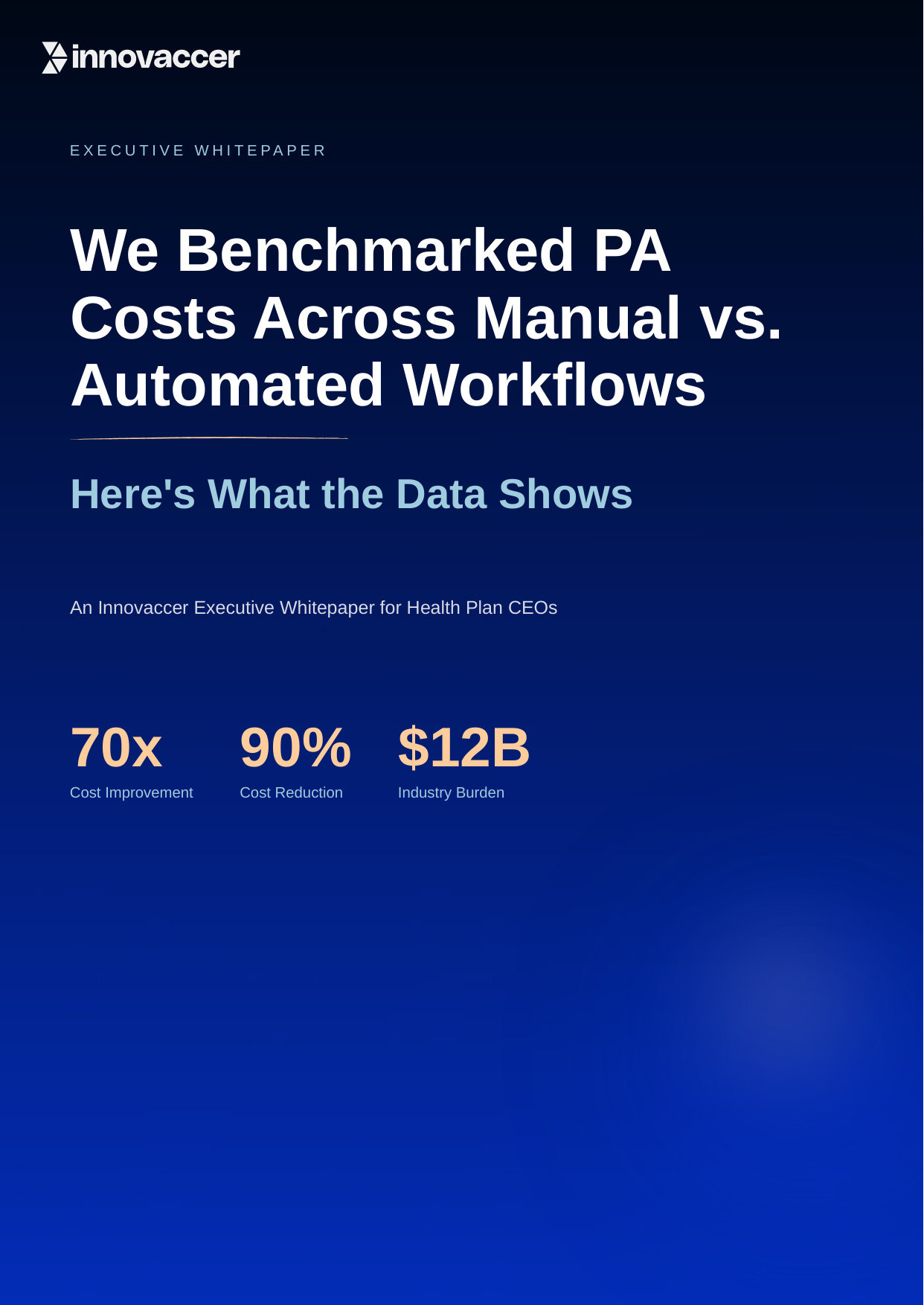
We Benchmarked PA Costs Across Manual vs. Automated Workflows
81% lower costs, same-day decisions, and a 2026 compliance deadline: the case for automation has never been clearer.


About the Whitepaper
Prior authorization is one of the most expensive administrative functions a health plan operates — and for most payers, the underlying workflow hasn't meaningfully changed in two decades. At $11.12 per manual transaction versus $2.11 automated, the cost differential isn't a rounding error; at scale, it's a structural disadvantage. Meanwhile, CMS compliance deadlines are hardening, and 80% of payers currently fall short of the real-time approval thresholds required by 2026.
This whitepaper delivers a data-driven executive analysis of what prior authorization modernization actually costs, what it saves, and what the regulatory and competitive timeline demands of payer leadership right now.
What You'll Learn
- The real per-transaction cost gap: Why the 81% cost reduction between manual and automated PA workflows translates into a compounding financial liability for plans still running legacy processes
- Where the $12 billion industry burden originates: How PA costs are distributed across payers, providers, and patients — and what that means for network relationships and member experience
- Your compliance exposure under the CMS Prior Authorization Interoperability Rule: What the 72-hour and 7-day turnaround mandates require, which thresholds most payers currently miss, and what the January 2026 and 2027 deadlines mean operationally
- Why 43% of payers haven't started API implementation — and how much runway actually remains before the window becomes a liability
- What a purpose-built automation framework looks like in practice: The architectural decisions that separate strategic redesign from a compliance checkbox exercise
- The downstream cost of delay: How manual turnaround times drive care deferrals, member friction, and provider abrasion that don't show up in a single line item
Download the whitepaper to build the business case for PA modernization before the regulatory and competitive window closes.

.svg)
.svg)