.png)
Recently, I had the privilege of attending the Global Health Exhibition (GHE) 2025 in Riyadh. The event brought together over 130,000 healthcare professionals, 500 global speakers, and 20 country pavilions under one roof. This year’s conference was built around a powerful theme: “Forging Tomorrow’s Healthcare Economy.” And for good reason. The energy was sharper, the questions more grounded, and the intent unmistakable:how do we translate AI’s promise into real progress for patients and providers?
The conversations captured the evolution of the global health agenda through longevity solutions, digital health scaleups, health equity, and wellness integration. Technology is no longer an adjunct to care; it is the connective tissue binding the components of modern health systems together.
Every conversation I had, whether with government leaders, insurers, or clinicians, centered around the same concept: moving from innovation in isolation to integration at scale. That mindset shift was reflected not only in the dialogue but in the partnerships and commitments forged right on the exhibition floor.
Setting the Stage for a Healthier Future
The conference opened with a strong message of intent. In his keynote address, H.E. Fahad bin Abdulrahman Aljalajel, Minister of Health for Saudi Arabia, highlighted how the Kingdom’s healthcare transformation is accelerating under Vision 2030. Healthcare systems in the region are proactively moving from treatment after illness to prevention before illness. He emphasized the nation’s progress toward extending life expectancy, supported by early screening initiatives and a sharp decline in chronic disease and accident-related deaths.
With more than $33 billion USD in agreements announced during the event, GHE 2025 cemented its position as a cornerstone platform for healthcare transformation and partnership, both within the Kingdom and beyond.
From Hype to How
The conversations at GHE weren’t about futuristic AI models or abstract possibilities. They were about specific operational challenges: fragmented data, overburdened staff, and disconnected systems that slow down care.
Some of the sessions particularly left a mark on me:
- Shaping Population Health: From Global Risks to Local Solutions: This discussion brought together experts, including Prof. Yvonne Doyle, Dr. Cother Hajat, and Dr. Nasser Aljehani, to explore the ways to reduce global disease burdens by targeting modifiable risks, advancing evidence-based prevention, and addressing the social and economic factors that shape health outcomes. It also emphasized the importance of population health management as a long-term strategy for national well-being.
- Building a Proactive Healthcare System: The Foundation of Preventive Care: In this conversation, recognized thought leaders in public health, genomics, and healthcare economics discussed how proactive systems can help reduce long-term costs of health care, especially to provide better access to preventive services for patients. Panelists like Prof. Duncan Selbie, President of the International Association of National Public Health Institutes (IANPHI), alongside regional health leaders, explored investment in preventive care. The discussion emphasized that prevention is key to sustainability, requiring innovation and data-driven care.
A New Chapter in Saudi Arabia’s Data Transformation
GHE also saw us making new strides in our goal of advancing data-driven healthcare in the Middle East.
The first was our MOU with Lean Business Services, a key step toward building a unified health data infrastructure across Saudi Arabia’s healthcare ecosystem. Fragmented data has long been one of the most significant barriers to coordinated care in the Kingdom. Without interoperable capabilities, it is difficult for health care providers to get the complete picture of a patient's health, determine patient outcomes, or address the issues of multiple transitions of care, each creating additional duplicative costs and complexity.
We are working together with Lean to change that. By enabling integration of real-time data across hospitals, clinics, and health authorities, we are building the foundation for smarter, more connected healthcare delivery. It is about making sure that every care decision, whether it is preventive, diagnostic, or therapeutic, is based on the most complete and up-to-date data.
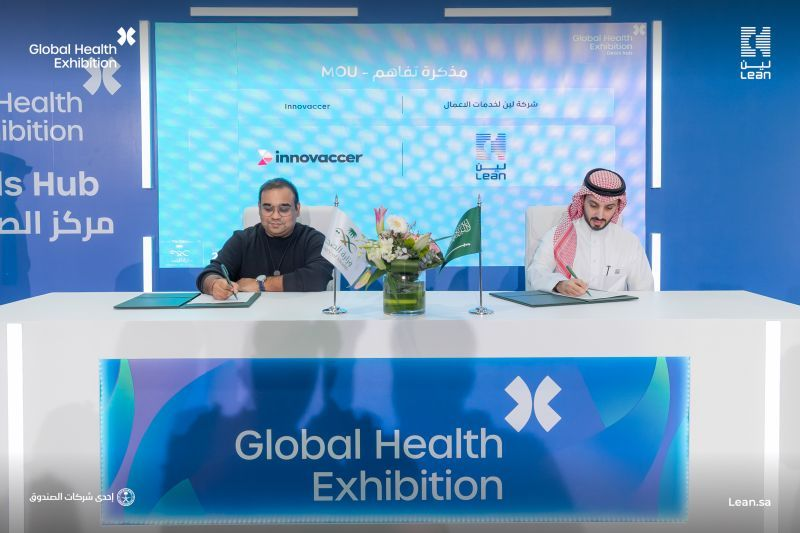
Seeing Lean’s CCO Khalil Alabdulwahab and our CTO Ankit Maheshwari formalize this partnership on the exhibition floor was a moment of genuine alignment. It reflected what Vision 2030 stands for: a healthcare system that’s efficient, data-driven, and centered on outcomes.
Accelerating Value-Based Care with Tawuniya
The second milestone came with the signing of a strategic partnership with Tawuniya, one of Saudi Arabia’s largest insurers. Our shared goal is to advance value-based care and population health through data unification, risk stratification, and AI-driven workflows.
By uniting payer and provider data on a single intelligent platform, we can better predict risk, personalize interventions, and design proactive care programs that reduce avoidable costs while improving member health.

This partnership, signed by Tawuniya’s Senior Executive Director, Hadi Alenazy, and Innovaccer’s CTO, Ankit Maheshwari, isn’t just about technology. This is about aligning those who provide care and those who insure it. When both sides have visibility into outcomes, quality, and risk profile, the healthcare system will be more scalable, equitable, and responsive.
Looking Ahead: From Vision to Action
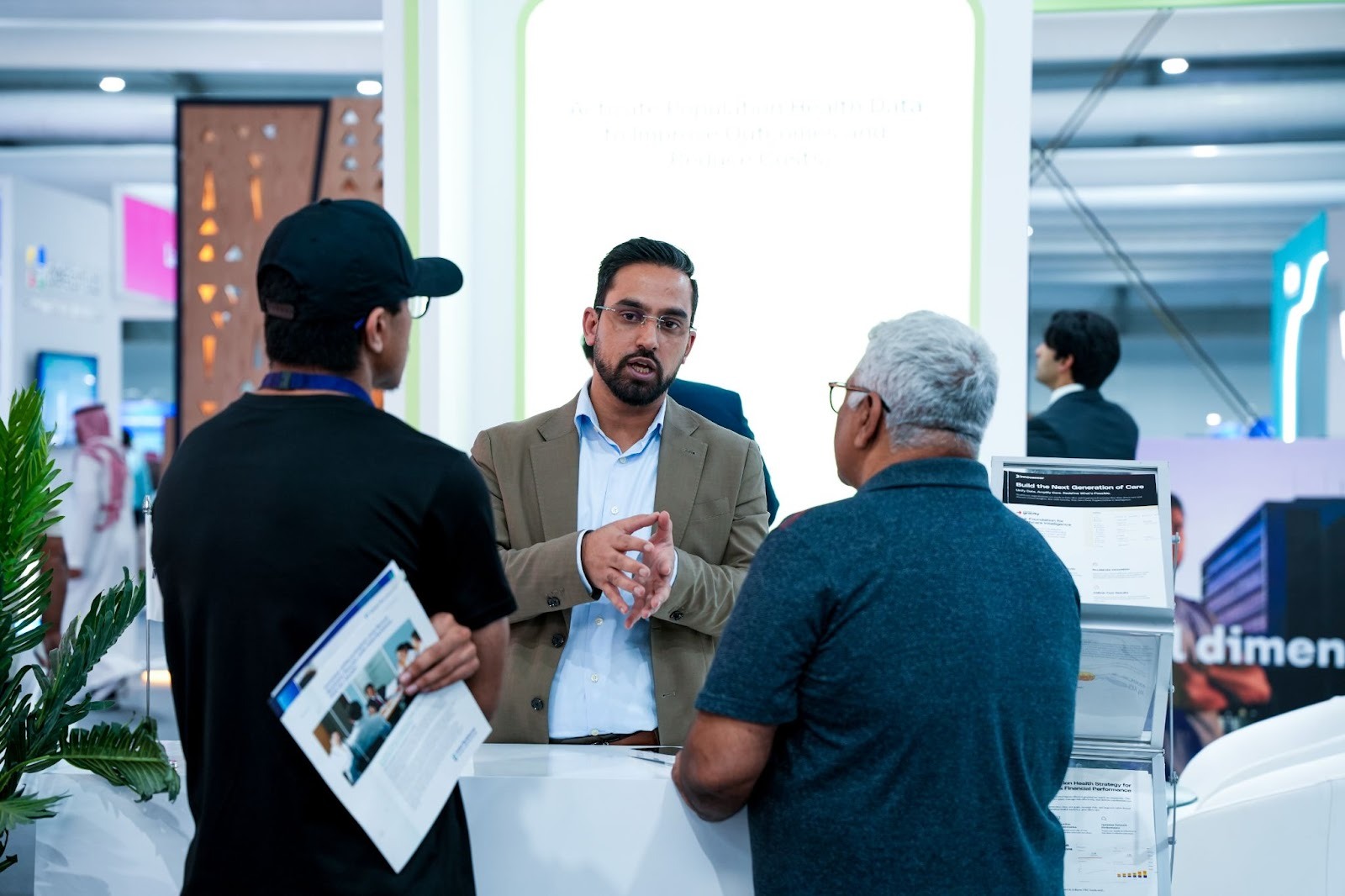
As I think back on GHE 2025, one thing feels certain: the future of healthcare in Saudi Arabia is not something you can see in the distance; it is being built today. In every interaction, from the exhibition hall to our booth, there was a clear intent: we needed to turn vision into action; we needed to turn data into impact.
Whether it was our collaboration with Lean Business Services to unify health data or our strategic partnership with Tawuniya to advance value-based care, each milestone underscored the same truth: The real transformation happens when innovation meets collaboration.
Saudi Arabia’s healthcare journey under Vision 2030 is setting a new global benchmark for what’s possible when technology, policy, and purpose come together. And as we continue working alongside our partners to build smarter, more connected systems of care, I’m confident that the conversations we began at GHE will translate into lasting change on the ground.
Here’s to a future where healthcare is proactive and to seeing how much further we’ll go by the time we meet again at GHE 2026.