Why Unified Patient Records Matter More Than Ever in the Middle East




A patient walks into an emergency department at 2 AM. She's visiting from another emirate. She has type 2 diabetes, a known drug allergy, and was recently prescribed new blood pressure medication by her primary care physician in Abu Dhabi.
None of that information is available to the physician treating her.
This isn't a rare scenario. In many healthcare systems across the Middle East, it's the default one. When patients move between facilities, whether across a city or across a border, their medical history often doesn't move with them. The result is repeated diagnostic tests, missed medication conflicts, incomplete clinical pictures, and care decisions made with fragments instead of the full story.
In a region investing more in healthcare than at any point in its history, this is the gap that matters most. Not a gap in ambition, infrastructure, or talent, but in the connective tissue that holds care together: data.
The Fragmentation Problem
The GCC healthcare sector has grown dramatically over the past decade. By the end of 2024, the region had approximately 882 hospitals, an increase of 176 facilities over 10 years, supported by a workforce of over one million healthcare professionals. Total healthcare spending across the GCC is projected to reach $159 billion by 2029, growing at 7.8% annually. Saudi Arabia alone accounts for the fastest growth, driven by an expanding population, wider insurance coverage, and Vision 2030 priorities.
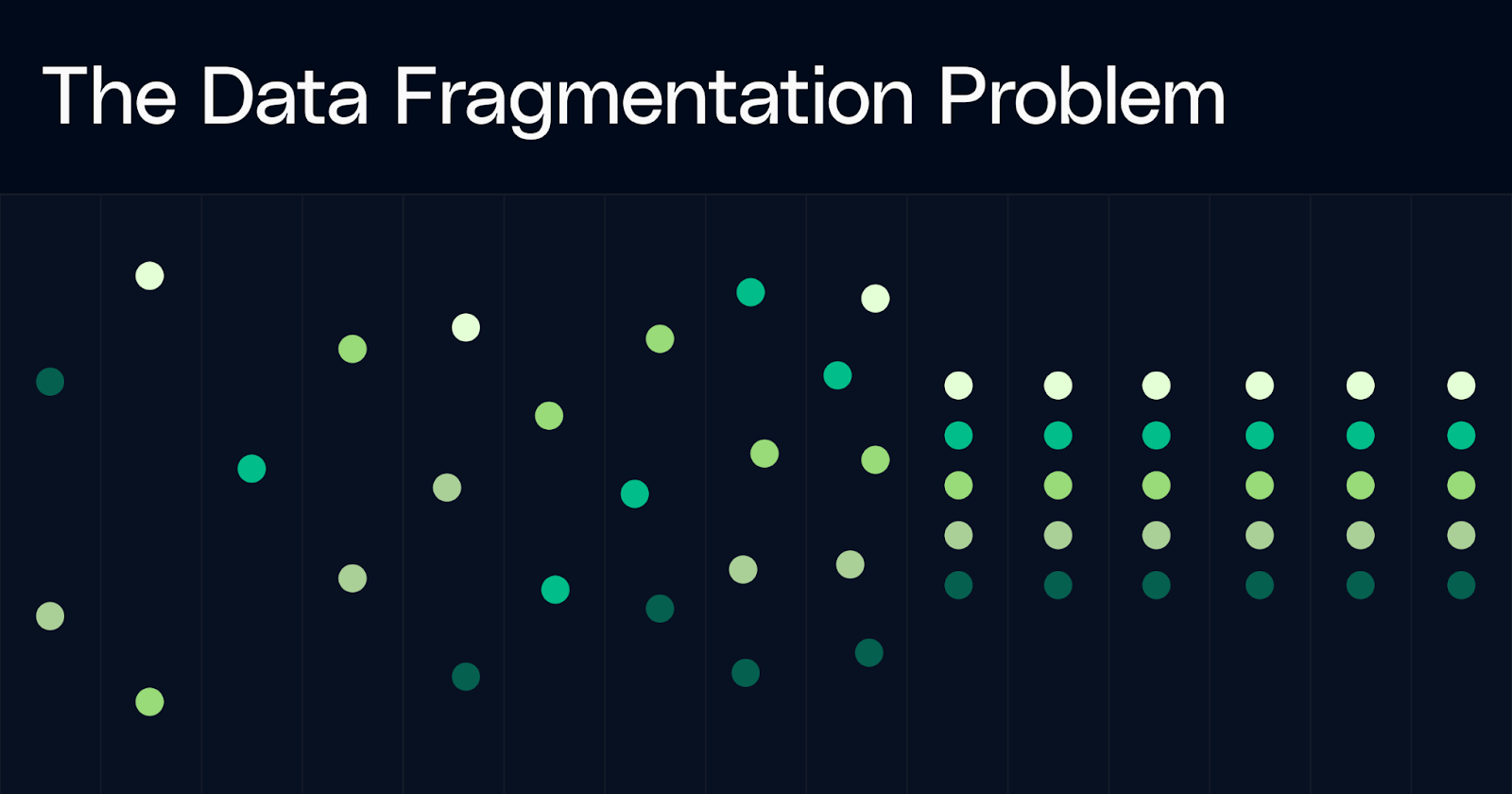
But much of this growth has happened in parallel, not in concert. Public hospital networks, private hospital groups, specialty clinics, primary care centers, and diagnostic labs have each built their own digital systems, often on different EHR platforms, using different data standards, with little or no interoperability between them. A survey of nearly 12,000 healthcare professionals globally found that only 7% described their regional health IT systems as having meaningful connectivity with other providers. The Middle East isn't an outlier in this challenge. It's typical of it.
The practical consequences are familiar to any clinician who has worked across multiple settings. A patient's lab results exist in one system, their imaging history in another, and their medication records in a third. No single view of the patient exists. Care coordinators spend hours chasing down records by phone, fax, or manual data entry. Physicians make clinical decisions based on whatever information happens to be accessible at that moment, which is rarely the complete picture.
This isn't just an inefficiency problem. It's a patient safety problem. A missing allergy alert, an invisible drug interaction, an untracked chronic condition. These are all consequences of fragmented data, and they carry real clinical risk.
Why Continuity Depends on Data
There's a specific scenario that's come into sharper focus across the region: what happens when patients can't receive care where they usually do?
When populations shift, whether due to personal circumstances, economic factors, or large-scale disruption, continuity of care depends entirely on whether a patient's history can travel with them. A longitudinal patient record that follows the individual, rather than being locked inside a single institution's EHR, is the difference between informed care and guesswork.
The WHO's Eastern Mediterranean Regional Office has noted that healthcare systems across 14 countries in the region are facing significant strain, with population displacement placing pressure on hospitals, shelters, and humanitarian support systems. When displaced individuals arrive at a new facility, the clinical team treating them has two options: start from zero or access a unified record that tells them what they need to know.
Unified patient records aren't just about convenience. They enable clinicians to see existing chronic disease management plans instead of starting new ones. They prevent redundant testing that wastes time and resources in systems that are already stretched. They flag medication interactions before they become adverse events. And they allow care teams to coordinate across settings rather than operating in isolation.
In a region where diabetes prevalence reaches 18.3% in Saudi Arabia and 15.4% in the UAE, well above global averages, the ability to maintain continuity for chronic disease patients isn't a secondary concern. It's a central one.
What Resilient Data Infrastructure Looks Like
If the problem is fragmentation, the solution isn't simply more technology. It's the right kind of technology, infrastructure designed from the ground up to unify data across systems, settings, and standards.
Resilient healthcare data infrastructure has a few defining characteristics.
First, it's cloud-native. Systems that depend on a single physical server room or on-premise data center are inherently fragile. Cloud-based platforms ensure that patient data remains accessible even when individual facilities face disruption, whether from a power outage, a natural disaster, or something more severe. Cloud infrastructure also enables the elastic scalability that healthcare systems need during demand surges: the ability to handle a sudden increase in patient volume without degradation in performance.
Second, it's EHR-agnostic. The Middle East's healthcare landscape relies on a mix of EHR platforms, including Epic, Oracle Cerner, MEDITECH, and a range of regional and specialty systems. Any data infrastructure that requires organizations to standardize on a single EHR is asking for a migration that will never happen. The practical path is a platform that sits across these systems, ingesting data from all of them and creating a unified, longitudinal patient record regardless of where the original data was generated. This is the approach organizations like Innovaccer have taken, building an integration layer that connects to existing systems rather than replacing them, using FHIR-based APIs and configurable data pipelines to create a single view of each patient.
Third, it embeds intelligence at the point of use. Unified data is only valuable if it's actionable. Predictive analytics that identify high-risk patients before they deteriorate. Population health dashboards that surface care gaps across an entire network. AI-assisted clinical decision support that flags relevant insights in real time. These capabilities turn a connected data layer into a care delivery advantage. They allow healthcare leaders to anticipate rather than react, whether managing a chronic disease cohort or responding to an unexpected surge.
Fourth, it's built for trust. In a region where countries like Saudi Arabia and the UAE have established rigorous frameworks for health data privacy and AI ethics, infrastructure must meet the highest standards of compliance and governance. Certifications such as HIPAA, HITRUST, and SOC 2 aren't just checkboxes. They're the foundation of trust that enables health systems to share data confidently across organizational boundaries.
Building for the Long Game
The current moment in the Middle East is revealing, with clarity, the structural choices that either support care continuity or undermine it.
The region's long-term healthcare vision is ambitious and well-resourced. Saudi Arabia's Vision 2030 is transforming how healthcare is funded, delivered, and measured. The UAE's investment in AI and digital health infrastructure has positioned it among the top 20 countries globally for AI talent density. Qatar's National Health Strategy, Oman's growing focus on patient experience, and Bahrain's advances in genomic medicine all point toward a region building healthcare systems meant to lead, not follow.
What all of these visions share is a dependency on data that works. Data that flows across systems, supports decisions, and follows the patient wherever they go.
The infrastructure decisions that healthcare systems make now will determine how well they can deliver on these visions. Not just in times of stability, but in the moments when resilience matters most.
The quiet work of connecting data, unifying records, and building foundations rarely makes headlines. But it's the reason care can continue when everything else is uncertain.

with the Power of Comet


.svg)
.svg)

.svg)