


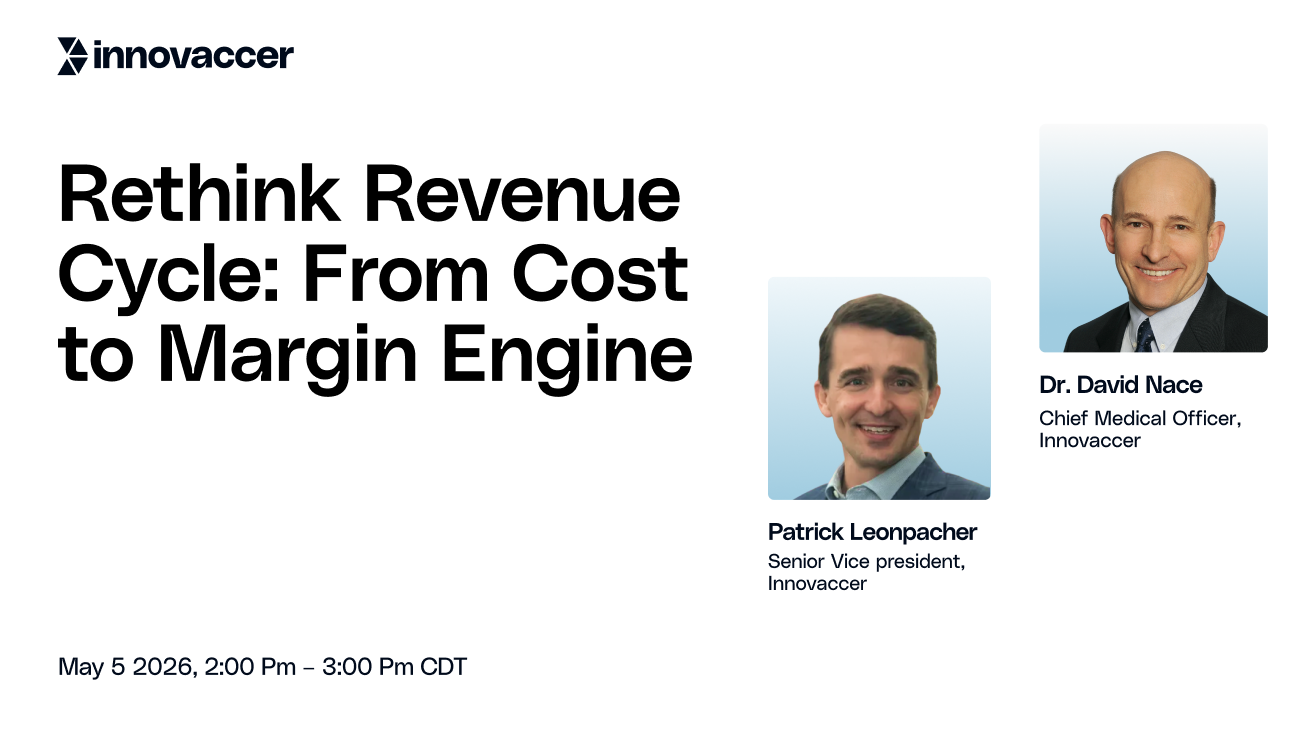
Rethink Revenue Cycle: From Cost to Margin Engine
Register to view
Fill in the form below to watch the video.
About this recording
A new operating model — not a new tool. Agentic AI doesn't just automate tasks. It creates an intelligence layer that compounds across every workflow — so every denial, delay, and coding outcome makes the entire system smarter.
Upstream Prevention Over Downstream Recovery: High-autonomy organizations treat prior authorization, eligibility, and documentation readiness as denial prevention — not administrative steps before billing.
Factory-Grade Execution with Clinical-Grade Controls: Predictable, traceable, auditable workflows that don't depend on individual staff knowledge. Autonomy at scale requires control frameworks that boards and compliance teams can trust.
Platform Compounding — Not Point Solutions: When workflow data and AI knowledge operate on a unified foundation, improvements in one area automatically propagate across service lines, sites, and payers. That's the difference between a platform and a collection of tools.
What you'll take away
- Why the traditional RCM model is structurally broken and how autonomous AI creates a compounding intelligence layer across every workflow.
- How leading organizations shift from downstream denial recovery to upstream prevention through prior auth, eligibility, and documentation readiness.
- What factory-grade execution with clinical-grade controls looks like: predictable, traceable, auditable workflows at scale.
- The platform advantage: how a unified data foundation propagates improvements automatically across service lines, sites, and payers.
Who you'll hear from

Dr David Nace
Innovaccer
Chief Medical Officer

Patrick Leonpacher
Innovaccer
Senior Vice President - Product
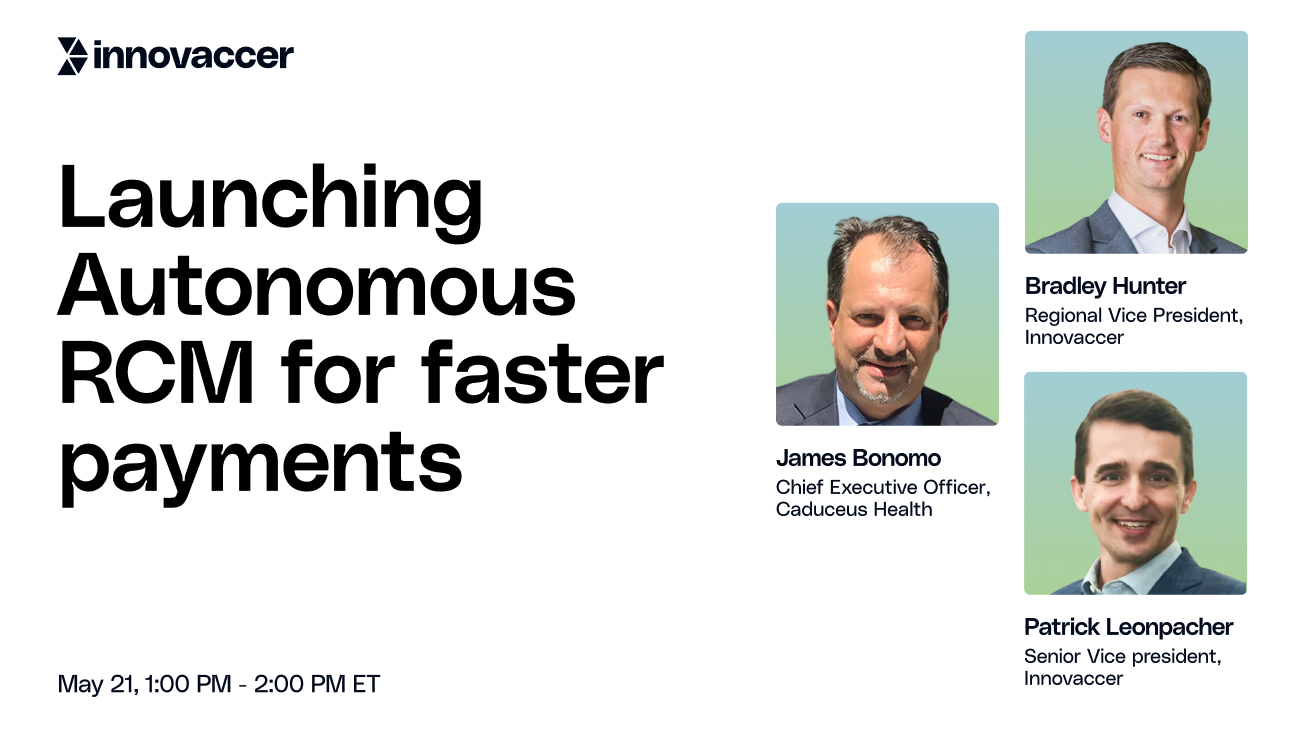
Launching Autonomous RCM for Faster Payments
AI-powered autonomous RCM that closes the payer-provider gap - 80% auto-coded encounters, 93% faster prior auths, and 90%+ cash collection. Built on decades of operational expertise.
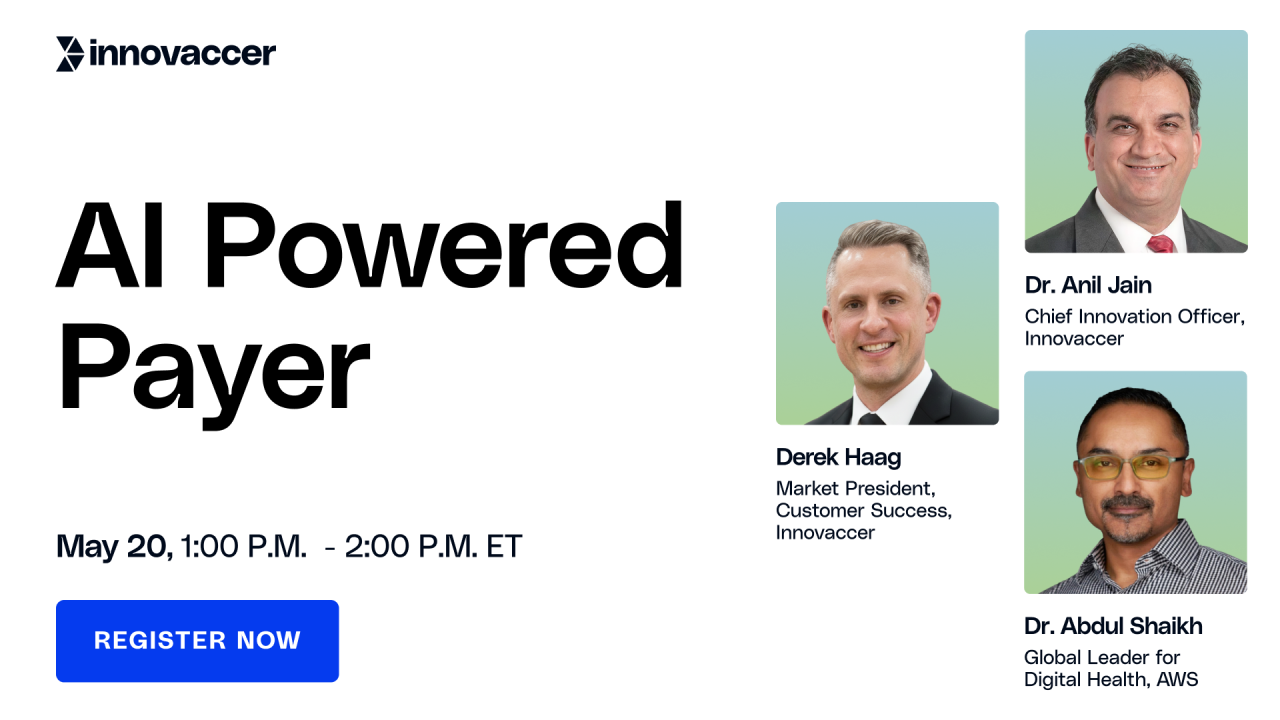
AI Powered Payer
AI in payer operations has moved from pilot to priority—and the next wave is agentic. Join Innovaccer and AWS on May 20 to explore real-world applications across prior authorization, clinical management, and cost containment.
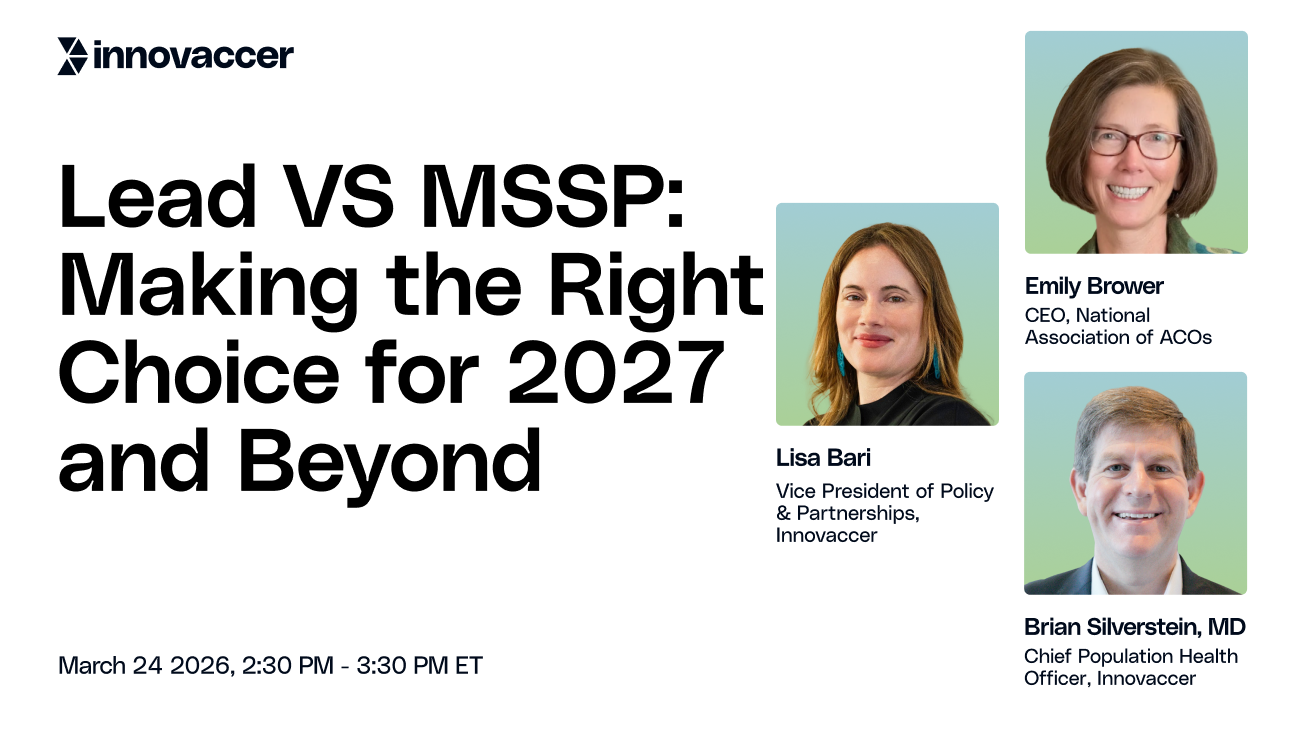
Lead VS MSSP: Making the Right Choice for 2027 and Beyond
Join Innovaccer and NAACOS for an expert-led conversation on what the LEAD model means in practice, how it compares to MSSP, and the strategic, operational, and financial considerations every ACO leader needs to evaluate before making a decision for 2027.