.png)
.png)
Last week, Maria walked into a small rural clinic carrying a plastic folder with a few discharge papers from a hospital 40 miles away. She looked tired, worried, and unsure of what she was supposed to do next.
The nurse wanted to help, but the clinic couldn’t see the rest of her record. Maria’s information was fragmented across multiple EHRs, her discharge summary, recent labs, and medication list all living in different systems that refused to speak to each other. The staff made phone calls, left voicemails, refreshed portals, and assembled whatever pieces they could while Maria waited quietly in the corner.
Maria represents countless rural patients whose care is delayed due to data fragmentation. Such experiences don’t always make headlines, but they play out in rural clinics every single day.
It’s why, when CMS launched the $50B Rural Health Transformation (RHT) Program, it implicitly validated something providers have been saying for years: you cannot improve what you cannot see. And just like in Maria’s case, clinicians across rural America are still expected to deliver care with only fragments of a patient’s full story.
The Systems Rural Providers Rely On Were Never Built to Work Together
For a long time, hospitals, clinics, behavioral health agencies, home health, and community partners have operated on a patchwork of legacy EHRs, state registries, and point solutions. These systems weren’t designed but they accumulated over decades of mergers, grants, leadership turnover, and doing what was necessary to keep care running.
But now, this fragmentation stands in direct opposition to what the RHT Program is asking states and rural hospitals to deliver: better access, better outcomes, a stronger workforce, and measurable progress every year.
Why Fragmented Data Hurts Rural Systems More Than Urban Ones
Urban health systems have interoperability teams, dedicated analysts, stable broadband, and sizable IT budgets. But when it comes to rural providers, they simply don’t have those structural advantages. And for them such inadequacies can lead to far more severe consequences.
In many rural communities, a single patient’s record is scattered across multiple EHRs spanning inpatient care, outpatient clinics, emergency departments, behavioral health, and community partners. Clinicians jump between systems and screens, hoping nothing critical gets lost in translation.
The staffing reality makes this even harder. The same person may be the care coordinator, the quality reporter, and the de facto IT troubleshooter. Expecting them to manually reconcile records or stitch together patient histories is inefficient and in the long run, unsustainable.
This fragmentation also puts funding at risk. RHT scoring will evolve every year, and without the availability of accurate and unified data, rural hospitals will struggle to demonstrate the progress required to secure future dollars.
While all this happens, care gaps continue to expand quietly. Chronic conditions get missed, screenings fall behind, and referrals stall when social, behavioral, and clinical information lives in separate silos. And in places where referral networks are already thin, the lack of real interoperability between rural hospitals and regional specialists can break continuity of care entirely.
This isn’t an IT inconvenience.
It’s an access issue.
An equity issue.
A workforce issue.
A survival issue.
RHT Funding Makes One Thing Clear: Data Unification Is Now Non-Negotiable
CMS has emphasized that RHT funding will be contingent on demonstrable results. However, delivering those results will depend on data that is complete, connected, and reliable. This is because without it, progress cannot be measured, and meaningful improvements cannot be sustained.
With rural systems entering an era where manual spreadsheets can no longer carry reporting requirements, care coordination must extend beyond the walls of a single organization. Social, behavioral, and clinical data all need to align in one coherent picture.
For this to happen, public health agencies require information fast enough to act, not weeks later. And AI or advanced analytics can only succeed when the underlying data is standardized, clean, and consistently available.
In this landscape, organizations need to move beyond thinking that integration is a compliance task or an IT project to revisit someday. It should be treated as the core infrastructure needed to turn RHT investments into real, lasting change.
What Data Unification Should Deliver for Rural Hospitals
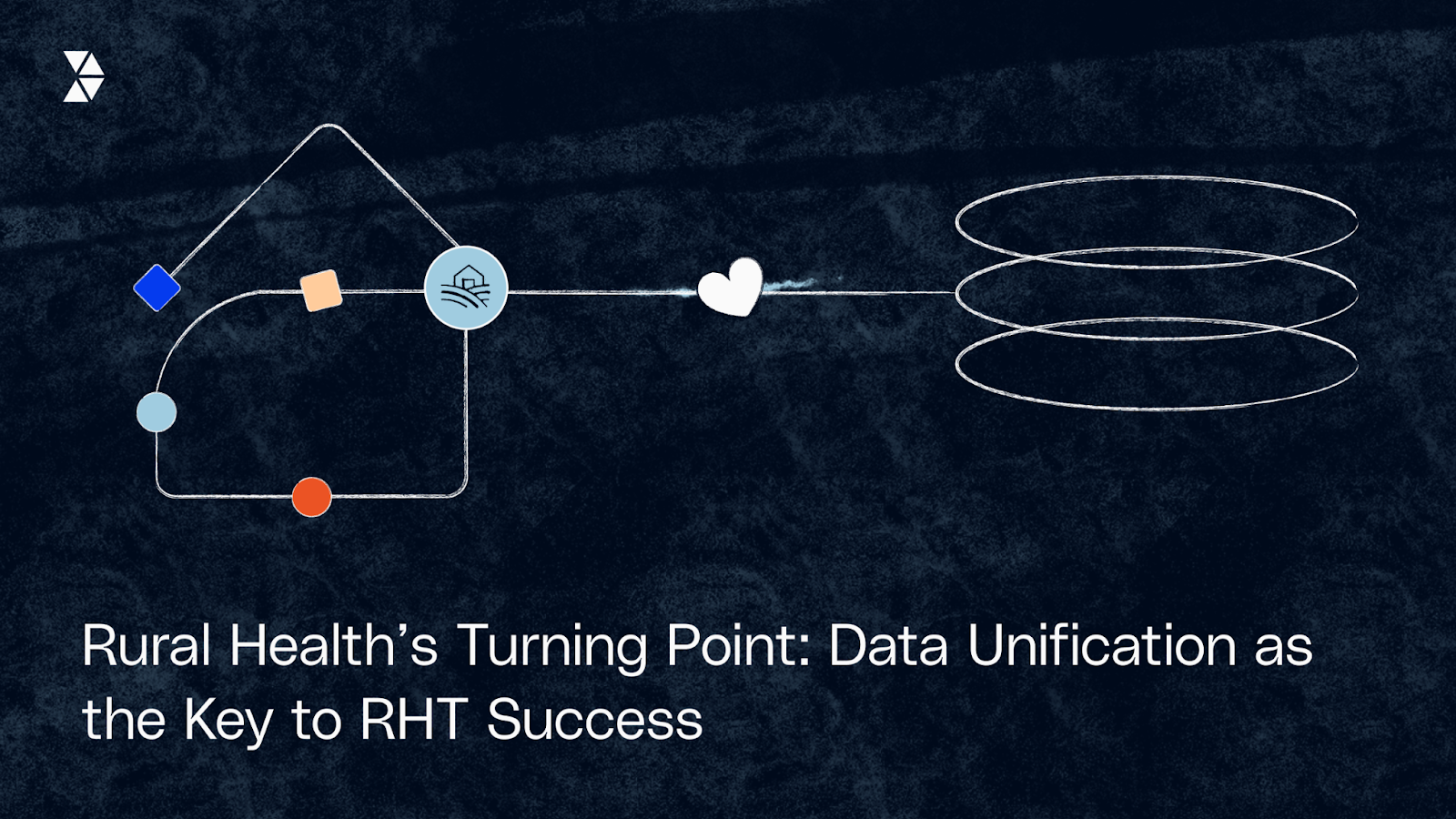
Achieving true data unification doesn’t mean replacing every legacy system. Rural hospitals need solutions that work across existing EHRs, state registries, and community databases, creating a single, coherent patient record. This unified record should include every encounter, lab result, specialist referral, behavioral health note, and community resource interaction.
Data must flow seamlessly in near real time, enabling clinicians to see a complete picture without having to switch between systems or chasing down information. Moreover, reporting should be automated, freeing quality coordinators from hours of manual abstraction and allowing leaders to track progress against RHT metrics without delay.
Integration must also be vendor-agnostic, respecting the investments hospitals have already made while providing a foundation for advanced analytics, predictive insights, and AI-driven care planning.
In short, data unification should give rural clinicians the same visibility and actionable insights that urban systems take for granted but without requiring a large IT team or extensive resources.
A Day in the Life of a Hospital After Data Unification
Imagine the same rural clinic months after implementing a unified platform. A patient arrives with multiple chronic conditions. The care team opens a single record and immediately sees everything they need: hospital discharge notes, lab results, medication changes, behavioral health updates, and community support referrals.
Referrals to regional specialists trigger real-time alerts. Automated dashboards track quality measures, population health trends, and care gaps without requiring manual entry. Staff spend more time with patients and less time reconciling records. Leaders can make informed decisions, identify high-risk patients, and allocate resources where they are needed most.
The hospital meets its RHT targets because the data is accurate, timely, and actionable. Staff feel supported rather than stretched thin. Patients experience seamless, coordinated care. What once was a chaotic, fragmented system becomes a foundation for better outcomes and sustainable funding.
Looking Ahead
Fragmented data is more than an administrative headache, it is a barrier to access, equity, workforce stability, and survival in rural healthcare. The RHT Program provides an opportunity to change that, but the work begins with data unification.
This blog is the first in a series exploring the biggest challenges rural health systems must overcome to turn RHT applications into measurable impact.