.png)
.png)
Maria’s discharge paperwork was thorough. Medications were updated. Follow-ups were scheduled. Referrals were sent to a local food pantry and a volunteer transportation service. From the hospital’s perspective, the loop was closed. From Maria’s perspective, nothing was connected.
The clinic documented her visit through a health information exchange (HIE). The food pantry tracked her intake in a separate system. Transportation requests lived on a spreadsheet. None of these systems spoke to each other. There was no shared consent, no confirmation that services were delivered, and no way to see the full picture. What looked like coordination was really a series of disconnected handoffs.
Stories like this surface most often in rural communities, where limited resources magnify every gap. The problem is not a lack of intent or effort. It is the absence of modern public health data infrastructure that can support integrated care across medical, social, and community settings.
Integration Was The Goal. Fragmentation Became The Reality.
Over the past decade, community information exchange (CIE) and social health information exchange (SHIE) initiatives have gained momentum as a way to enable cross-sector data sharing. The vision is straightforward: allow healthcare providers, social service organizations, and public agencies to coordinate around shared data so individuals receive whole-person care.
Yet many rural regions are still operating with tools that were never designed for this level of coordination. Systems evolve independently. Funding arrives in silos. Technology decisions prioritize short-term compliance over long-term interoperability. The result is uneven progress toward public health digital transformation, despite growing urgency.
Where The System Starts To Break Down
Interoperability remains one of the hardest problems to solve. While healthcare organizations increasingly rely on standardized exchange, social and community organizations often operate outside those frameworks.
Efforts to improve connectivity often focus only on clinical data. Modernizing health information exchange systems without including social and behavioral information leaves critical blind spots. Effective public health data sharing solutions require infrastructure that supports data movement across sectors, not just within healthcare.
Data quality presents another obstacle. Inconsistent intake processes and incomplete records reduce the effectiveness of data analytics. Without clean, connected data, population health analytics, it’s difficult to move beyond basic reporting. Many agencies want to pursue data-driven transformation, but lack a reliable health data integration platform to support it.
Operational realities add further strain. Staff are asked to work across multiple tools, re-enter information, and track outcomes manually. This limits the practical use of AI and analytics in public sector health and delays access to real-time health data insights when they matter most.
Layered on top of all this are privacy and compliance requirements. Managing sensitive data across healthcare, public health, and social services makes consent management in healthcare data especially complex. Strong public health data governance and secure data exchange in healthcare are essential, but often difficult to implement with limited technical capacity.
A More Sustainable Path Forward
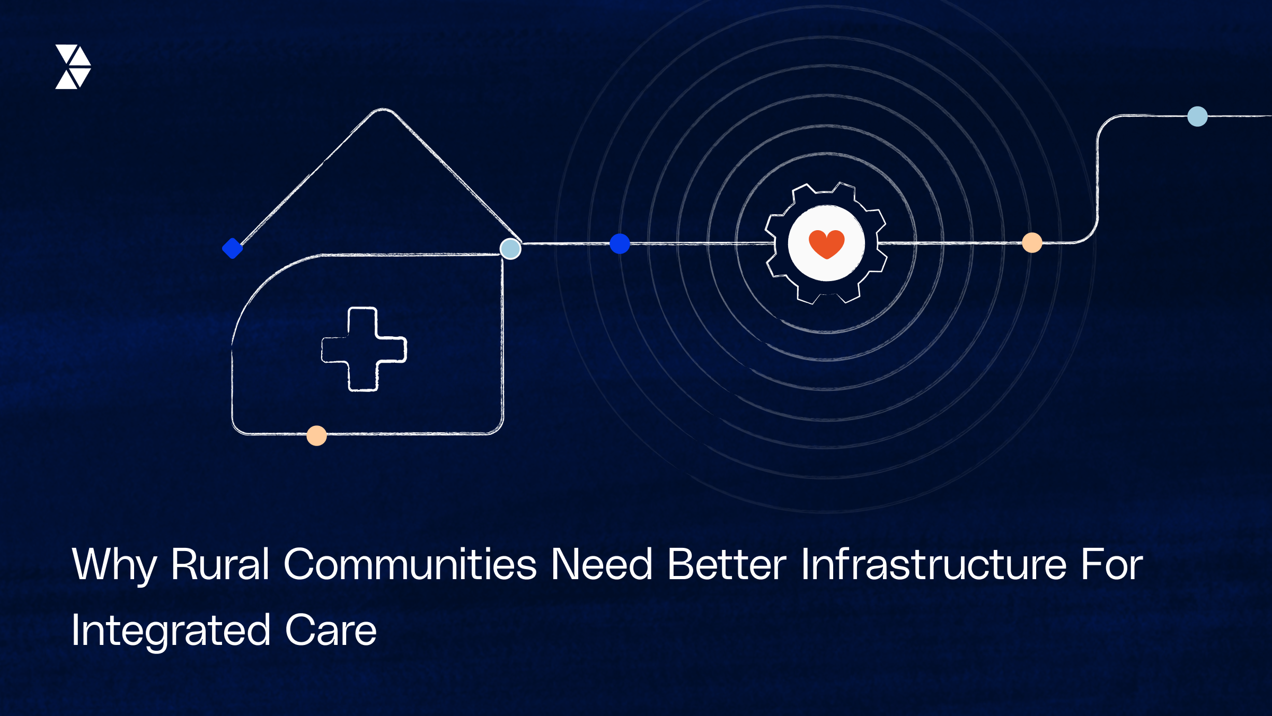
Solving these challenges requires more than adding another system to the stack. Rural communities need shared infrastructure that is flexible, scalable, and designed for cross-sector coordination.
Innovaccer’s platform for CIEs and SHIEs brings together clinical data from HIEs, claims, labs, and social determinants into a longitudinal record that reflects how care actually happens. This foundation enables healthcare interoperability while supporting analytics, automation, and reporting at scale.
With the community resource module, the platform connects healthcare providers with local social service networks (housing, transportation, food insecurity), enabling whole-person care and addressing social determinants of health in rural settings.
Innovaccer also supports public health data modernization by automating reporting to state and federal programs. This reduces administrative burden and accelerates operations modernization. Moreover, the platform supports telehealth and patient engagement tools that automate outreach, reminders, and assessments, helping rural patients stay connected to care between visits.
What Integrated Care Really Requires
Telehealth and digital engagement tools help extend care in rural areas, but technology alone is not enough. Without shared data and coordinated workflows, these tools operate in isolation. When combined with AI and analytics in public sector health, however, they help close gaps between visits and support earlier intervention.
Integrated care depends on visibility across systems, trust between organizations, and data that moves at the speed of need. CIEs and SHIEs were created to support that vision. Their success now depends on modern public health data infrastructure, scalable governance models, and platforms built for collaboration: like Innovaccer’s platform.
Rural communities do not need more disconnected solutions. They need infrastructure that enables public health data sharing solutions, supports health data integration platforms, and turns information into action. With the right foundation in place, integrated care becomes not just possible, but sustainable.
This is the fourth blog in a series, exploring the biggest challenges rural health systems must overcome to turn RHT applications into measurable impact.