The Policy Stack Podcast #Ep 1: Key Lessons from Kody Kinsley




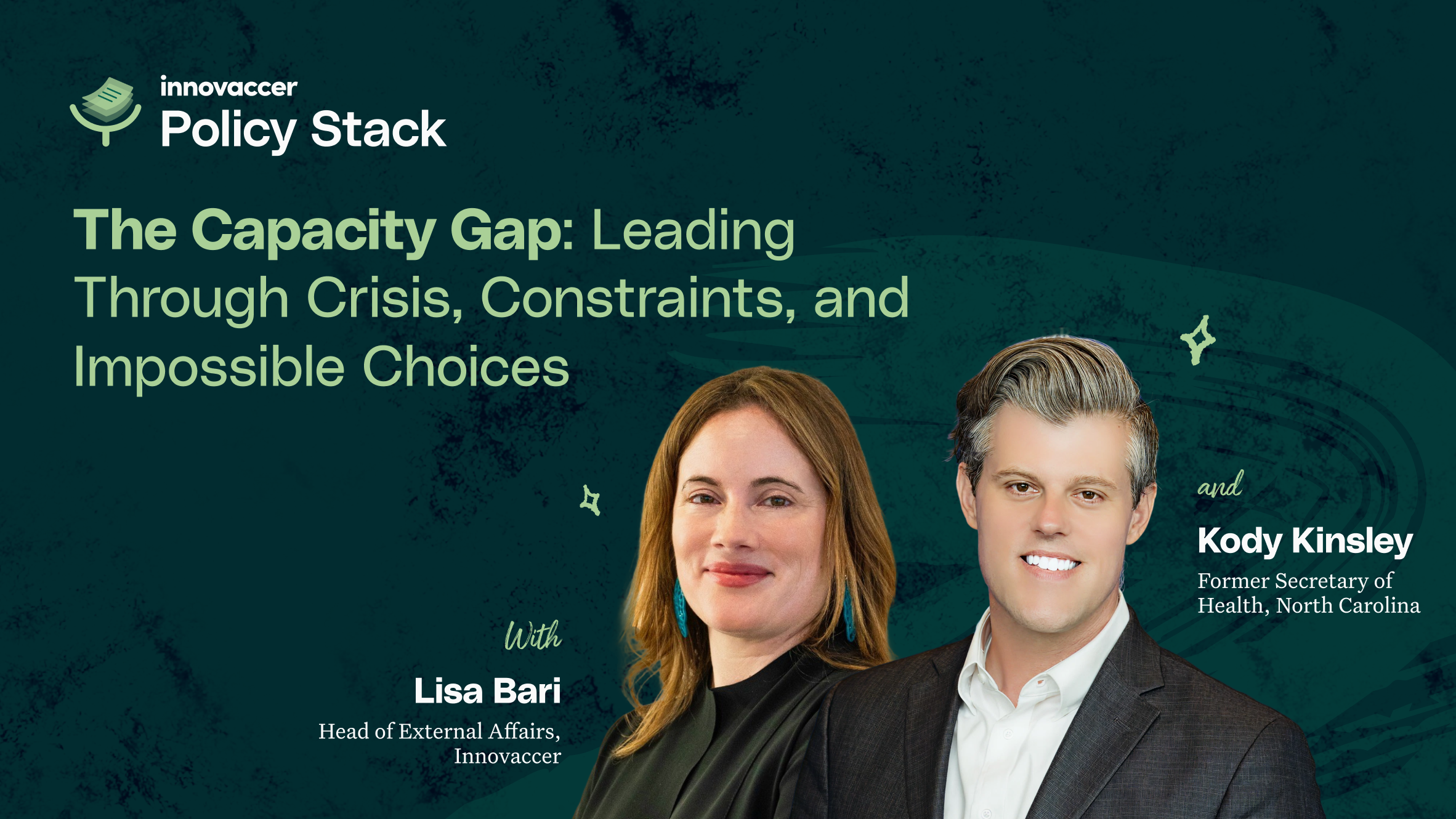
Kody Kinsley served as North Carolina's Secretary of Health and Human Services, overseeing a $38 billion department with 18,000 staff while navigating COVID-19, a historic Medicaid expansion, and a behavioral health crisis. His experience offers valuable lessons for anyone working in healthcare policy implementation and government leadership. Here are key lessons from Lisa Bari’s conversation with Kody Kinsley on the Policy Stack Podcast:
1. Personal Experience as Policy Intelligence
Kinsley's childhood growing up without health insurance helped him develop more empathy and understanding as a policy maker. When his team announced "free" COVID testing, he understood why uninsured people remained skeptical, because people without health insurance don’t think any health care services are actually free. This insight shaped their entire communication strategy going forward.
Kinsley emphasized the importance of building diverse teams with varied backgrounds and using trusted messengers to effectively communicate with different communities for successful policy implementation.
2. The Implementation-First Mindset
Kinsley emphasized that policy success depends entirely on how well it is executed at the ground level, not just the vision behind it. So, while others focused just on policy design, he obsessed more over implementation on the ground.
Kinsley’s team didn't just expand Medicaid, they built systems that enrolled 40% of people without human interaction and had 280,000 people covered through automation as soon as medicaid expansion was launched.
3. Strategic Relationship Building
Kinsley successfully implemented historically opposed policies with a Republican legislature through a simple principle: build relationships before you need them. He invested months doing joint town halls with legislators across the state, creating shared experiences that transcended party lines when it came time to vote.
4. Crisis as an Opportunity
During COVID, Kinsley's team built a vaccine registry in six weeks—normally a multi-year project. The COVID crisis provided three rare gifts in government: dedicated funding, singular focus, and permission to say no to everything else. Smart leaders recognize these moments and move fast.
5. The Art of Strategic "No"
Perhaps Kinsley's most valuable skill was protecting his team's focus by ruthlessly eliminating non-essential work. In government, where saying no is rare, this became his competitive advantage. Every declined project meant more energy for the initiatives that truly mattered. Rather than trying to do everything, Kinsley focused on strategic wins that would compound - each success building credibility and reducing future pressures.
-------------------------------------------------------------------------------------------------------------------------------
Want to hear how Kinsley navigated the messy realities of state government, built unlikely coalitions, and managed competing crises simultaneously? Listen to the full Policy Stack Podcast episode here.

with the Power of Comet


.svg)
.svg)

.svg)