Consent Management – Powering Trust in SHIE and Beyond




.png)
In our last blog, we touched upon how Social Health Information Exchange (SHIE) helps break down silos by bringing together social, health, and community data to support whole-person care. But connecting data is only the first step. For SHIE or any cross-sector data exchange to work in practice, trust and consent are non-negotiable.
Communities will only be eager to participate when they are confident that their data is handled responsibly, securely, and in line with their preferences. This is where consent management comes in. It establishes the necessary foundation for safe, responsible, and scalable data sharing. Whether a county is coordinating care across providers or sharing incarceration information with partner agencies, a proper system makes sure the information is shared with the right people, at the right time.
The Challenge: Consent in a Multi-Domain World
On the surface, consent might seem as simple as a patient signing a form. In reality, for counties and agencies working across multiple domains, it’s far more complex.
Let’s revisit John’s case from our last blog. He was not only managing asthma but also dealing with the stress of losing his job and facing eviction. To stay on his feet, John needed help from multiple places. He needed the support of his primary care doctor to manage his health, a behavioral health provider to support his mental well-being, a county housing authority to stabilize his living situation, and a caseworker to connect him to benefits.
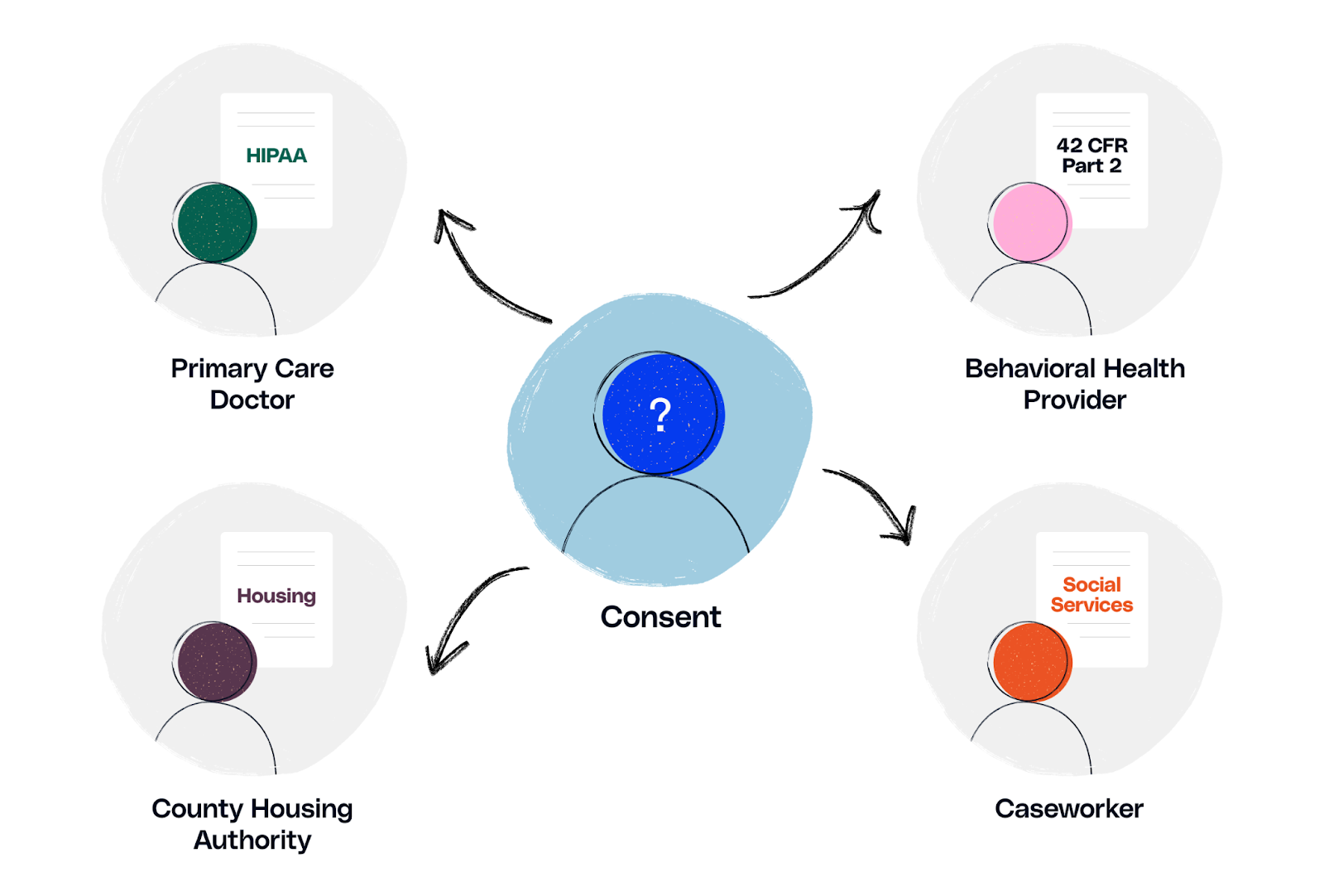
But at every step, John was asked to sign different consent forms. His clinic required a HIPAA-compliant form. His behavioral health provider needed one that complied with 42 CFR Part 2. The housing authority had its own paperwork, while social services followed yet another process. Each form was worded differently, covered a different timeline, and often required him to show up in person to sign.
For John, this was confusing and overwhelming. He wasn’t sure who would actually see his sensitive information, how long his consent would last, or whether he could revoke it later. As for the counties, it was a compliance and coordination challenge. For them, different regulations, data types, and agency rules made collaboration slow and increased the risk of non-compliance.
Thus, consent is harder than it looks because:
- Different regulations: Counties must navigate HIPAA, 42 CFR Part 2, GDPR, and CCPA, but state laws add significant complexity. California's CCPA, Washington's "My Health My Data Act," and Illinois' BIPA impose stricter consent and privacy requirements than federal baselines. This regulatory patchwork means SHIE systems must accommodate varying compliance frameworks depending on data origin and user location.
- Data Sharing Agreements (DSAs): Even when SHIE systems are built, much depends on the DSAs between counties, providers, and partner agencies. These agreements can differ widely, making it difficult to establish consistency.
- Consumer consent: Ultimately, data sharing hinges on whether residents grant and maintain consent, yet the current patchwork of forms and processes often leaves them confused or hesitant.
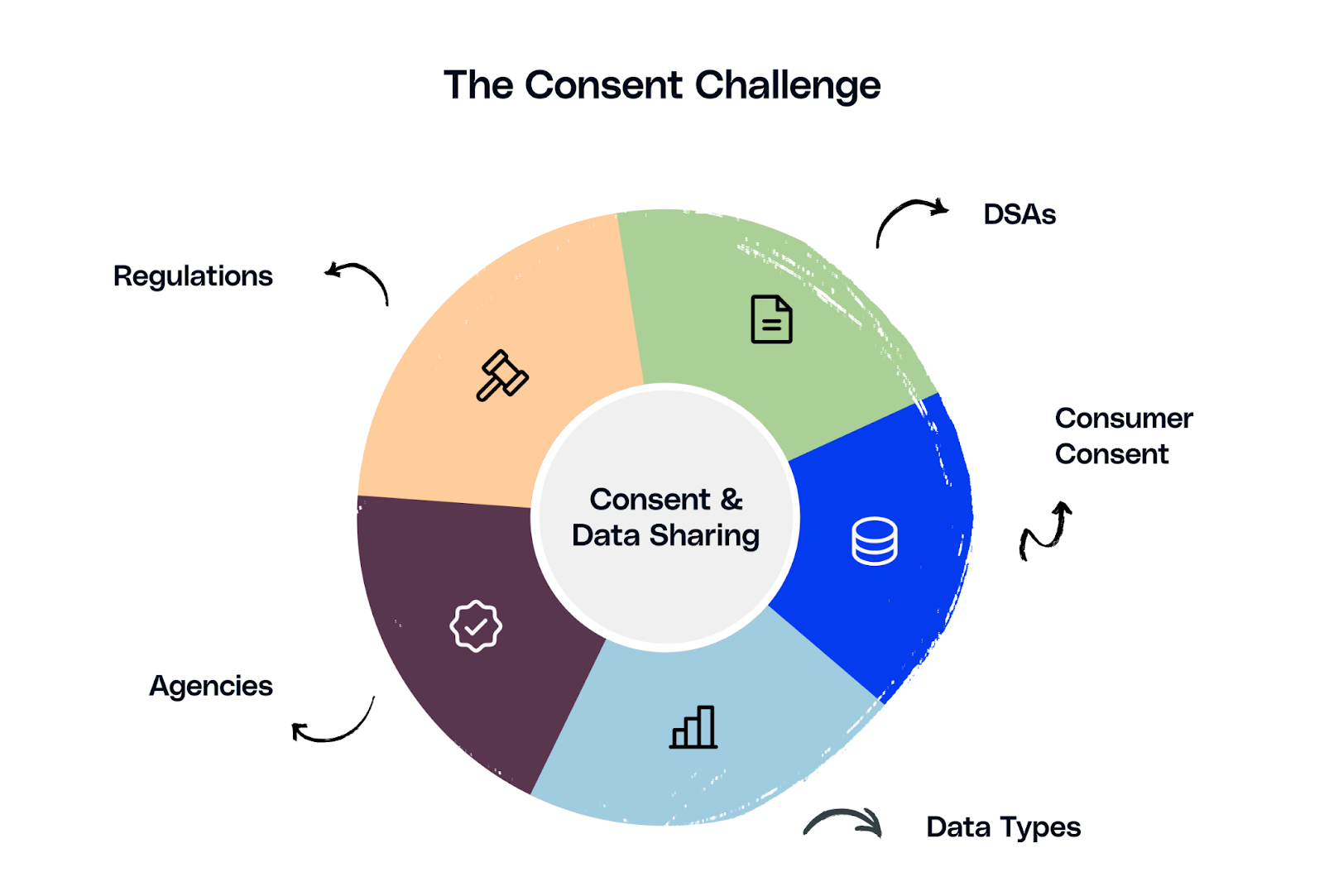
- Different data types: Clinical, behavioral health, housing, justice, and education data each carry unique sensitivities and are governed by separate rules.
- Different agencies: Every department has its own workflows, policies, and compliance obligations, leading to fragmentation.
For health information exchanges to realize their full potential, counties need a consistent and dynamic consent management system that goes beyond basic compliance. Such a system should ensure adherence to complex regulatory standards, reducing the risk of penalties or legal exposure.
What Enterprise Consent Management Brings to the Table
Within Innovaccer’s SHIE, consent management is more than just a compliance checkbox. It is what fosters trust and responsible data exchanges across counties. Robust enterprise-grade consent capabilities are built into SHIE, enabling counties to move away from static, paper-based consent processes to ones designed to accommodate the reality of multi-agency engagement.
Here’s how SHIE manages consent across health, housing, justice, and social systems:
Consent Capture
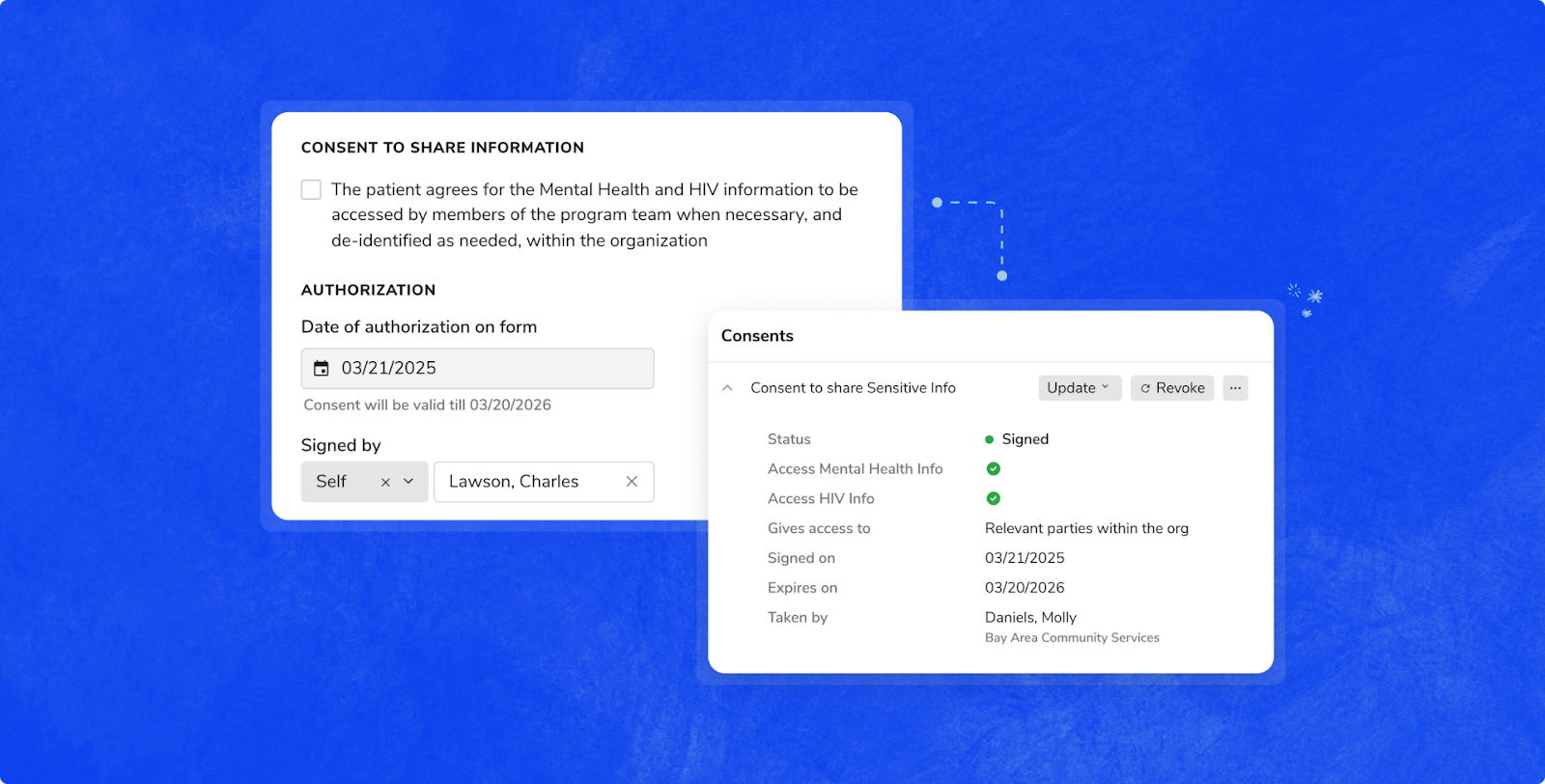
Innovaccer’s SHIE supports flexible consent capture through e-signatures, manual uploads, or OCR-based digitization. Counties can manage consent not only for data sharing, but also for program enrollment and service participation across domains.
Consent Lifecycle
Consent is not a one-off event. Innovaccer's SHIE monitors whether consents are pending, expired, or revoked, including full version control and audit trails. It honors resident preferences while ensuring county compliance.
Rules & Redaction Engine
The Innovaccer consent framework allows for granular controls. Counties can enforce rules based on user role, program, or data type, with sensitive details, such as ICD codes, behavioral health information, housing records, or jail data, redacted as needed.
Real-Time Enforcement
Consent is enforced at the exact moment of data access within Innovaccer’s SHIE applications, APIs, dashboards, and analytics, ensuring that privacy and compliance are never an afterthought.
Admin & No-code Configurability
County administrators can configure rules and redaction logic directly within SHIE without IT bottlenecks, making governance agile and responsive.

Interoperability
Because Innovaccer’s SHIE is built on a FHIR-native foundation, its consent management integrates seamlessly with other third-party systems and consent databases.
Audit & Compliance Layer
Every access, override, and rule application within SHIE is logged automatically. With built-in support for HIPAA, 42 CFR Part 2, GDPR, and CCPA, counties are always audit-ready and protected from compliance risk.
How Consent Management Strengthens SHIE in Practice
Instead of remaining an abstract compliance feature, Innovaccer’s SHIE actively shapes how counties protect sensitive information, coordinate across agencies, and deliver whole-person care. Here are a few examples:
Housing & Health
In our last blog, we saw how John, who was managing diabetes and facing eviction, needed support from multiple agencies. With SHIE, his eviction data can be shared alongside his health information, but consent management ensures that only his authorized care providers see the sensitive housing details. His physician gets the context needed to manage his care, while the housing authority accesses only what is relevant to housing support.
Reentry After Incarceration
For individuals returning to the community after incarceration, SHIE brings together justice, health, and housing data to enable smoother reentry. Consent management enforces strict federal rules such as 42 CFR Part 2, ensuring that sensitive behavioral health information is only shared with approved providers.
Preventing School Dropouts
Schools and social programs can coordinate early interventions for at-risk students through SHIE. Consent management ensures that parental or guardian permissions govern what’s shared, protecting sensitive education and health records while still enabling timely action.
Who Benefits
With consent management built into Innovaccer’s SHIE, counties and their partners can manage sensitive data more easily and securely. This reduces friction between different stakeholders.
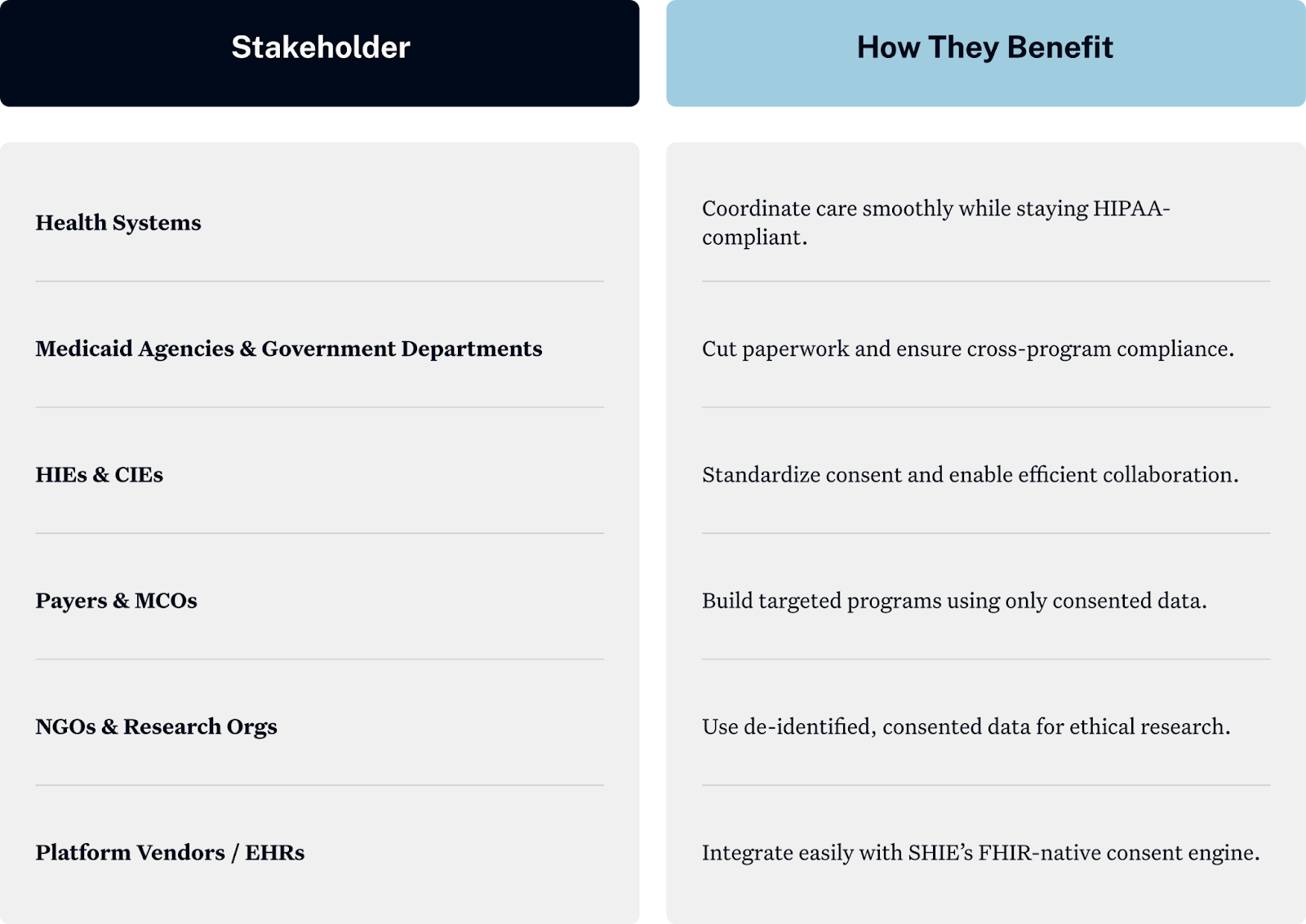
Here’s how different stakeholders benefit:
Making Consent the Cornerstone of Connected Care
As we scale SHIE across counties and communities, consent will be the bedrock of trust that makes responsible data sharing possible. While SHIE shows us the power of cross-sector data sharing, consent management ensures that this power is exercised responsibly. With strong consent frameworks built into SHIE, counties can focus less on navigating forms and regulations and more on delivering whole-person care.
Want to see how SHIE can power consent management and help build trust with communities? Get in touch now.

with the Power of Comet


.svg)
.svg)

.svg)